Episode Description
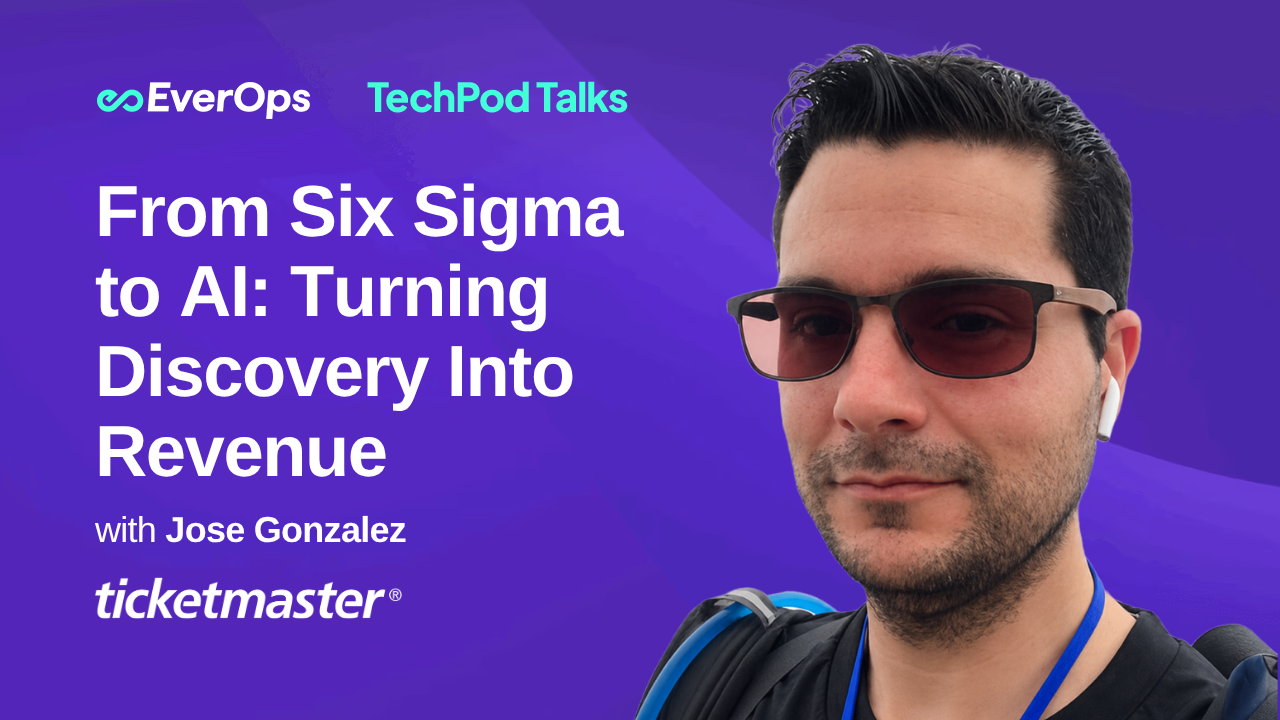
Jose Gonzalez, VP of Product at Ticketmaster, shares how a career spanning the dot-com bubble, Johnson & Johnson, Yahoo, EA, Amazon, and a Techstars-backed AI startup shaped his approach to product leadership. He breaks down the power law behind media platforms, what it takes to scale teams under pressure, and why trying to put the AI genie back in the bottle is the wrong move.
Main Topics Covered:
- An unconventional path from web dev and Six Sigma process engineering at J&J to VP of Product at Ticketmaster
- How power law dynamics drive media platforms, and why you can't build your business around hits alone
- Co-founding an AI startup (Naria) through Techstars, and what the experience taught him about timing and product-market fit
- Scaling teams fast: hiring for horsepower over perfect fit, and knowing when to lower the bar without dropping it
- Why AI adoption mirrors the MP3/Kazaa/Spotify era, and the leaders who stop resisting will define what comes next
- Using AI at Ticketmaster to connect fans with the right event at the right moment through smarter signals and discovery
Links & Resources
00:00:08 - 00:00:33 Stephen Koza
There's a version of product leadership that's about owning roadmaps and doing stand ups. But then there's the version that's about turning a cost center into a revenue engine. Co-founding an AI startup while between jobs solo building a GPU accelerated visualization tool on your nights and weekends, all while holding down a VP role at one of the biggest live events platforms in the world.
00:00:33 - 00:01:00 Stephen Koza
My guest today has done all of it, and he's got a really specific theory about why the people who don't are going to get left behind. So I'm Steven Koza. Welcome to TechPod Talks. Today I've got José Gonzalez, VP of Product, Ticketmaster. Jose spent 20 years leading product teams across gaming, music, live entertainment development platforms, companies like vivo, EA, Amazon.
00:01:00 - 00:01:25 Stephen Koza
At Amazon, he transformed a cost center into a revenue generating engine, scaled a team from 55 to 110. He co-founded a startup, did a accelerator through Techstars. He's now at Ticketmaster, leading acquisition and discovery, using AI to connect fans with the right event at the right moment. Jose, how are you man? Welcome to TechPod talks.
00:01:25 - 00:01:35 Jose Gonzalez
Yeah, you make me sound way more interesting I think I am. It's probably like my weaponized ad is coming out. But yeah, I'm happy to be here.
00:01:35 - 00:01:52 Stephen Koza
Yeah, well, I'm sure you're going to live up to it based on what I know about you. So yeah, I'm excited to jump in and, you know, thanks again for joining. So I always like to kind of go back and hear a little bit about the origin story. I know you you started your career as a web developer.
00:01:52 - 00:02:06 Stephen Koza
You were in quality and production engineering at Johnson and Johnson. You've got a Six Sigma green belt. Early in my career I was at Motorola, so I actually know what Six Sigma means. And at least back then, it was a big deal.
00:02:06 - 00:02:10 Jose Gonzalez
You know what that means? You're at a very different cohort of these.
00:02:10 - 00:02:27 Stephen Koza
Yeah. I never you know, I have no belts. I never took the class. But I'm familiar. So, you know, I would say, you know, that's not a super typical path into product management. Tell us a little bit about your background and how did that lead you to the PM track?
00:02:27 - 00:02:55 Jose Gonzalez
Yeah, it's a it's that meme of success is not a straight line. I feel like my whole life kind of lives that go and like circle sometimes. Yeah. My story started to I was a web dev back in like the.com bubble and so kind of living the.com bubble pre and post it. So started programing probably like and then got recruited into work that shot and then the bubble hit while I was studying computer science.
00:02:55 - 00:03:12 Jose Gonzalez
And so what do you do. And I feel like a lot of your listeners are probably the same camp right now. If you're you're away. If that were writing like like are full industries can totally change in the US, what's it going to look like on the other side. So I had the benefit of living through that during.com.
00:03:12 - 00:03:33 Jose Gonzalez
So yeah, I was a web dev. And what was interesting was I got recruited into Johnson and Johnson because I was a web that they were going through a digital transformation. But when I got there, all their processes were like paper or whatever. Even though on the roads being shipped all over the world and they were like, approvals would get bored.
00:03:33 - 00:03:55 Jose Gonzalez
And so they wanted someone like, hey, can you help us digitize, like our processes? So that's where my like, my art started. And then ironically, because of that experience there, I got recruited Yahoo because they wanted someone that could help them processes and also my web background. So I kind of like went full circle because of that.
00:03:55 - 00:04:16 Stephen Koza
Man, that's yeah, that's different for sure. I, I really want to ask about the Six Sigma thing though. Not not not to give you a PTSD or anything, but what did that teach you? Like were there any quality or systems thinking things that came out of it that you leverage, that serve you all today?
00:04:16 - 00:04:48 Jose Gonzalez
Yeah, it's funny because I kept my like Six Sigma little booklet that they give you and like FDA regulation that they gave you for years. Yeah. Hopping into that world was fascinating. Like one of the first things I saw was like this huge flow chart at the senior engineer that was working under Patton's wall. And what we were really trying to figure out was even with, like, the paper based like system that they had, like almost design, what are the what are the points where you want to have a faster throughput?
00:04:49 - 00:05:08 Jose Gonzalez
And then what are the points that we actually want to design some friction into your processes. And I think about that a lot in like just building products, like a really good example of that, like a vivo. We, we tried really hard to streamline our like onboarding process. Like we saw that like we just kind of had like a leaky bucket.
00:05:08 - 00:05:33 Jose Gonzalez
And then so like we stripped it away almost like we engineering would strip it away all the steps and try to get in. But then what we found is like people would get in there, people would go higher, but then we would, we would have people that were resting in rest routine going through that and the kind of like secret sauce and that figured out there needs to be a little bit of friction in your onboarding process, something that you can create that's yours.
00:05:33 - 00:05:52 Jose Gonzalez
And then that would that like accelerate our engagement retention. And so I think back to that experience I like you kind of want to always be thinking about like where do you want to streamline. You don't want to streamline so much where you're not thinking through like, what are the points that you want to inject into the product process or even to your team, right.
00:05:52 - 00:06:12 Jose Gonzalez
Like, like what are the product reviews are going to have? How are you going to still have alignment across teams, and when's the right time for you to have like building that into your systems or into your org structure? And it's definitely an art. But yeah, I go back to that. Well, quite often that's about like that visualization was like massive.
00:06:13 - 00:06:38 Stephen Koza
Oh that's cool. See I, I think if it was me I would have erased all that from my memory. But maybe I should have taken the class. I'm curious for your take on what Elon Musk is always talking about when it comes to engineering processes. And delete, delete, delete. And if you haven't taken enough out of it to break something, you haven't done enough and then you put the critical stuff back in.
00:06:38 - 00:06:45 Stephen Koza
Sounds brilliant, but probably a little bit harder in practice than he makes it sound. What's your point of view on that?
00:06:45 - 00:06:47 Jose Gonzalez
I mean, I think anything.
00:06:47 - 00:07:09 Jose Gonzalez
There's a lot of truth in it, but I feel like so much of the discourse, especially on Twitter and social media, you lose nukes on these things. Then like that's where the art or engineering leadership comes in. Like when you apply these things, I like even the concept like Brian's like it sounds great, but repeat yourself. There's totally times you want to write.
00:07:09 - 00:07:32 Jose Gonzalez
And so yeah, I like it's just that's a truism, I would say. But I think so much of what we do as leaders, product and engineering like it's it's the new when do you apply these things. And like what's the right time. I mean when do you when do you change that methodology. Right. Your or probably shouldn't be static forever.
00:07:32 - 00:08:00 Stephen Koza
Yeah I think another word for that's judgment. And I'll come back to that when we get to the AI stuff. So you know, you've been across some different industries, different kinds of roles, different sizes of companies. And at least one of the three lines, as I understand it, is just turning discovery into revenue. So fans finding events, gamers finding their next obsession, developers finding tools.
00:08:00 - 00:08:15 Stephen Koza
And so given you've done that across entertainment, gaming and all these verticals, is there a pattern that transfers across those industries that you've seen and any surprises along the way about what's similar and what's really different?
00:08:15 - 00:08:39 Jose Gonzalez
Yeah, I mean, both for sure. I think the the common through line, they all follow a bit of a power law. Right. So like and this is true being able to build your own products. I'd say like systems you just take a step back the most value or the most consumption happens in a very set of like either events or content or even features on your product.
00:08:39 - 00:09:06 Jose Gonzalez
Right. It's like, what are the most of these parts of your product? Right? Just lay that out and grab it out. You're just going to find some power curve that's going to happen. And so it's like every media consumption platform that I've worked on kind of follows that same trend. And so you have this like interesting challenge where like you know your hits, you know, used big top like consumption events or the media like are your big winners.
00:09:06 - 00:09:33 Jose Gonzalez
And if you got one like that can make your whole year. But creating those things super hard, right? Like if it was really a repeatable process to create hits, we'd all be Max Martin, like punching out Taylor Swift bits every year, right? It's just not a thing that you can continue to do. Rely on CEO. All these platforms like the way I manage in the way I think about it, it's like you kind of hope pretty set to come in, but you can't rely on that for all your growth.
00:09:33 - 00:10:02 Jose Gonzalez
And so you really have to start thinking about how do you build products and capabilities and systems that can support the hits when they do it there. But then, like, you're almost helping helping the new hits become like up to the top of the top. Like how do you help platforms like do that mechanism? Otherwise you just kind of like a hits place, and then you back yourself in a bit into a wall where it's like you're building things just for your so just for your content, and then something new comes along.
00:10:02 - 00:10:19 Jose Gonzalez
It's like slightly different. And now you've now you have the entire system or entire product. So yeah, it's really thinking about it like almost like a, like a wheel of concept. And then like different points in time that content can do that real. How do you support it?
00:10:19 - 00:10:31 Stephen Koza
Was there anything that you thought you could carry from one job or one industry the next, like, oh, I got I know how this works. And turns out it was totally different and that assumption was wrong.
00:10:32 - 00:11:01 Jose Gonzalez
Yeah, there's two that come to mind immediately. And it's funny because in hindsight, you're like, of course that's true. So going from like, you know, basically social media kind of stuff. And when I was at Yammer and then even music media and video media and video games, I anticipated some things with carryover. But like, I don't think I appreciated how complex video games are to me.
00:11:01 - 00:11:20 Jose Gonzalez
It just sounds so silly to like, say that now. But you know, if you want to migrate your your video or your podcast from one platform to the next, upload the best quality version of it, right? And it's like the distribution platform to take care of that for you. If you want to port your video game from one to the next.
00:11:20 - 00:11:45 Jose Gonzalez
Not that simple. There's so much complexity underneath the hood that we built, like just support each platform and giving it to you. Try to like make it an agnostic to those platforms. You're still end up going like, you know, superpower tree and things like that. So that was one that really stood out just like, okay, to to really grow games and really think about it like to like mass blaster games across different platforms.
00:11:45 - 00:12:09 Jose Gonzalez
It's not as simple as just like, yeah, just like, you know, it's the code base. It's you decide to work that way. And there's just like nuances for each each of those platforms that I didn't appreciate sells in this space. But the other one comes to mind is like now in the meat space, which Ticketmaster, you know, with video, you kind of have like, you know, unlimited consumption that can happen.
00:12:09 - 00:12:16 Jose Gonzalez
And like if you want to go see Metallica, there's only so many shows that can do that. One time.
00:12:16 - 00:12:38 Stephen Koza
Metallica, we were chatting about that offline and I told you, I promise I won't ask you. I had a hard time getting Metallica tickets, so I'll stay away from that. Well, let's jump into entrepreneurship. I know it's something you and I are both passionate about. You left a senior role at Amazon to go co-found a startup. Tell us a little bit about that.
00:12:38 - 00:12:50 Stephen Koza
What? What was the story? What made you want to take the leap? How did you get the guts to do it? What did you have to give up on to go do it and get good at it? What was all that about?
00:12:50 - 00:13:15 Jose Gonzalez
Why decided to work on what I did? AI was pretty nascent, even though. Like, we'd been built like AI and ML products for. I mean, going back in my career, like, search engines are really just a version of like, them. But something felt really different when I was playing with the APIs. Reach out to PC and being like early stage, I had like a pilot product that we've built out.
00:13:15 - 00:13:41 Jose Gonzalez
Just an experiment on switch when I was just to get us into that space and just something very felt. It felt like when I was back in the 90s, like learning about just like this is this is going to be a big thing. Like, I don't know what it's going to look like, but it's so obvious. Like this, this space I want to play in, hopping into doing the startup was for me was just like, how can I just very quickly get into this space?
00:13:41 - 00:13:59 Jose Gonzalez
So it wasn't really like for me. And every time I've changed jobs, it's never really been like a risk to me because my approach has always been, how do I go learn as much as I can in this newspaper, and what's the right role and what's the right company for me to go learn what I'm trying to go learn?
00:13:59 - 00:14:13 Jose Gonzalez
It's very rarely been about like, money or anything like that. It's always been like there's some kind of outgrown chasing, and it's usually a growth like outcome for myself. And it's felt like it was the right time for me to do a startup, to go learn that world.
00:14:13 - 00:14:34 Stephen Koza
My experience was maybe I thought it was too dangerous and took me way longer to actually make the leap in hindsight. So I'd love for you to talk about the company. So I the the name was Inria if I've got it right. You said you said you took it through Techstars went from prototype, scaled it, raised some money.
00:14:34 - 00:14:35 Stephen Koza
Walk us through that.
00:14:35 - 00:14:56 Jose Gonzalez
If you don't find that sense of adventure like joyful and interesting, but probably don't do startups because, like, it's it's a chaos by design. So yeah, like the general idea, I was playing around with a lot of stuff at my first theater. On the same time, I just saw a trend where and what I saw most companies doing.
00:14:56 - 00:15:19 Jose Gonzalez
Most companies chasing at the time was like trying to create an exploit, Instagram and me spending a lot of time in space and my kids like books. I just thought, you know, in my own hobbies, like music and movies, doing some kind of creative work home because like this, this technology can probably actually help me make a book for the first time.
00:15:19 - 00:15:46 Jose Gonzalez
I can tell stories, I can make up stories to my kid at bedtime. But like, wouldn't it be really cool if she could have, like, a real book and like years later, like some of the books that we still read at that time were books that I made her just pretty awesome. So the general idea was like, and I take like any, any dummy like me and help them action to create physical or like a story and like an AI just like fill in gaps.
00:15:46 - 00:16:13 Jose Gonzalez
And a lot of ways we did we did do that. Like obviously that works at home. I think a lot of like we're still using these data. Point five, like the models that exist today are just like light years ahead of that. I think our thesis was right. I think we're just little girly with it. But that's that's part of the of startups too, is like getting product market fit is also getting tiny, right?
00:16:13 - 00:16:30 Jose Gonzalez
That's not always like I'm reminded of a story of Shazam where he wants to like 2002 until 2008 with the iPhone that like they found product market fit. It can sometimes take that long, and you don't always have the money in one way to take that long. It certainly did not.
00:16:30 - 00:17:02 Stephen Koza
Yeah. Gosh, that's so true. The timing thing I, I worked with a computer vision AI startup, which was before the ChatGPT moment. So like, you know, they couldn't go leverage nano banana or, you know, one of the frontier Lab models. And they had some cool applications. They, they aimed at at like manufacturing and other industrial segments and had a new kind of different cloud way base to doing things made a ton of sense.
00:17:02 - 00:17:13 Stephen Koza
But yeah, they just like, you know, those are hard industries to sell into. And they were having to build a bunch of the stuff that's now open source. And yeah, timing is totally everything.
00:17:13 - 00:17:13 Jose Gonzalez
Totally.
00:17:13 - 00:17:39 Stephen Koza
There's a VC. I forget who said this. I mean, they probably all say some version of it, but there's kind of magic and going and trying to do the thing that all of a sudden is possible because of something, a technology evolution or a regulatory thing. And, and if you can nail that timing, sometimes, you know, you can be super smart and have money and great ideas, but sometimes that's the unlock.
00:17:39 - 00:17:59 Stephen Koza
That's the thing that, you know, if you create the IoT thing that all of a sudden can communicate over a cellular network because, you know, that wasn't possible a few years before, then you can leverage cloud like it's just it's nailing the timing around all those things. Let's let's talk about leadership for a minute. So you've led big teams.
00:17:59 - 00:18:28 Stephen Koza
And I know at EA you had a product team that had to scale pretty quickly. And at Amazon you you built a pretty big team over there. I imagine you had different kinds of scaling challenges. What is like what have you learned about building teams and doing it quickly? That that might be a little bit different if, you know, building a team slowly or without the the, the time pressure might look like.
00:18:29 - 00:18:55 Jose Gonzalez
If you're in a spot where you have to scale to quickly, it's just like you're just trying to get your capacity as quickly as possible. So you know, you're launching new product vertical, your startup, you're you hit product market fit. And I was like, oh yeah, we got a market. And so the muscle you have to really quickly develop is like, how do I build a framework to hire like you're going to bar?
00:18:55 - 00:19:26 Jose Gonzalez
Whereas when you're not in that time crunch, like you can take the time to, like, diligently find the right perfect fit for that role. Right. And you should in those, in those that time. Right. It's kind of like the, you know, the wartime like CVO, kind of like when you're in wartime, when you're in scale time, like you got to move fast, you got to figure out ways to like, make really fast decisions with very little data and be very comfortable with that and comfortable with like, force correcting, inevitably screw it up.
00:19:26 - 00:19:40 Jose Gonzalez
So yeah, it's that you I think the big trick for all that is like, you got to develop some quick frameworks for your thinking, and that includes hiring and scaling and just be very okay. We're making as best of foreign decisions.
00:19:40 - 00:20:08 Stephen Koza
And that's interesting. I want to ask you a little bit more about the the bar element of that. So I was at a company that was, you know, rocket ship mode. And we, we went from 100 million in revenue when I joined a 2,000,000,000 in 6 years, which, by the way, is not that impressive today. If you look at the anthropic of the world and our thing, I mean, we would leave a role open for a year.
00:20:08 - 00:20:35 Stephen Koza
And so we found the right person and that was the culture. You know, we're not going to compromise. We're going to keep the bar high. But that's got a downstream effects. You know, you want to button the seat and it's a growth limiter in some respects. So how do you how do you reconcile that. Like you don't want to leave a role open forever, but yet you don't want to just hire super fast to fill butts and seats because you do have some quality expectations.
00:20:35 - 00:20:38 Stephen Koza
How do you think about reconciling those two things?
00:20:38 - 00:21:04 Jose Gonzalez
Yeah, I think like there's a lot of great candidates for just about any role, and you can shape the role to be whatever you need to. And oftentimes like after you hire someone to chase, right. It's like just inevitably you have that. And so it's just try not to be overly perfect when I'm in that, that space in that it's like, okay, what's like the rough like sets of traits that we're looking for for this person, right.
00:21:04 - 00:21:35 Jose Gonzalez
And can this person come in and redefine this space because like, otherwise we're all actually doing visible, right? It's a critical role whether it does engineering hire brought it hire a strategic buyer. And so it's like okay, like I just need someone to like run with it and honestly just redefined this space for us. I just think we want to be more about like, what are the experiences that this person is and like the kind of thinking they're going to have to have and can even do that.
00:21:35 - 00:21:43 Jose Gonzalez
And there's exceptions to that. If you're hiring for like an AI senior year and you probably want like an AI senior leader, right?
00:21:43 - 00:22:13 Stephen Koza
That is definitely something I learned back in those days, was like, we kind of had this mentality, you no higher for horsepower. You know, the drive, the intellect, the all the soft skills. And then whatever the domain thing was, you know, they can probably figure it out, by the way, like the the less successful companies I was at or just, you know, watching competitors, they just try and like pick up the person from the competitor with the exact same job title.
00:22:13 - 00:22:22 Stephen Koza
They're like, oh, we need a, you know, director of this. Let's go to, you know, the next company over that has a director of this in the law firm a little bit more money and it'll be great.
00:22:22 - 00:22:52 Jose Gonzalez
You could kind of see it with like a lot of successful sense now. Right. And like just just a new prophecy. We're like, how did they. How did that happen? They didn't hire for those roles like those roles that exist. Right? They didn't have roles. Right. So it's like, okay, I love that horsepower like higher for horsepower, like someone's super smart that, you know, can come in and just like, been working in a big space and just go just make decisions for you and offload that from your team.
00:22:52 - 00:22:57 Jose Gonzalez
Right. And like, those are going to be your future leaders for your company.
00:22:57 - 00:23:25 Stephen Koza
Yeah. The another one I really like is the Rising Star profile. So somebody that you know there it's kind of a stretch forum. They haven't done it. But like you look at you've looked at their career trajectory and they're getting promoted over and over at the same company. And you kind of make a bet on them. And I want to say like, almost all of those bets I made throughout my career really worked out, even if it didn't feel like it was going to work out in the moment.
00:23:25 - 00:23:40 Stephen Koza
I mean, some of those people are, you know, they're, you know, they've grown their career and their VP's, you know, public tech companies now. And I'm like, I remember when I hired you, I was right. I was right about that.
00:23:40 - 00:23:54 Jose Gonzalez
That's the best feeling in the world. You know, it's like I look back at the team and like, you know, just gone on to like, you see, like meta books. And he's just like, yeah, like. And I knew when they were not that. Right.
00:23:54 - 00:24:11 Stephen Koza
Yeah. You're like, man, I got I got it right. And it feels pretty good, you know like, not that I try and take a whole lot of credit, but I'm like, you know, I did something to give them the platform to learn and grow and all that. And yeah, I do take a lot of pride in that. Well, let's jump into AI.
00:24:11 - 00:24:45 Stephen Koza
Can't have a conversation these days without it. And I love doing it because I always learn a ton. And I think it was a podcast I was listening to, and I just heard a story about AI deepfakes being used to like, steal money in this example was crazy. So somebody infiltrated this company and had a meeting full of deepfake bots with like, a finance person, like a real finance person at this company on the zoom.
00:24:45 - 00:25:11 Stephen Koza
And they got them to wire, like, approve like millions of dollars of wires because they use they basically used AI to, you know, establish the trust thing. So like if you get a you get an email, you know, like you might be like a little suspicious about this big wire request, right? But if it's the CEO on a zoom call, you're like, you might it might seem kind of funky, like, oh, we normally don't wire this much money, but this.
00:25:11 - 00:25:20 Stephen Koza
But it's the CEO's face and voice telling you it's going to be okay. And that kind of puts you at ease. And so that was the example I heard this week. And oh my gosh.
00:25:20 - 00:25:37 Jose Gonzalez
Yeah I mean I think about that like of all scams for like elderly you know, or last couple of decades, you know that like now like someone just utilize our voices and call our parents. You know, it's just like, how would they know? Like they wouldn't.
00:25:37 - 00:26:03 Stephen Koza
Yeah. So so I wanted to ask you about a LinkedIn post that you wrote, and it was the one about comparing AI encoding with what happened with photography and the iPhone. And I think we I think we might be a little like minded on this, but we'll see. I think the argument you made was people are trying to put the genie back in the bottle or keep the gates closed, and that's just not going to happen.
00:26:03 - 00:26:22 Stephen Koza
You can't put the genie back in the bottle. And the folks that I'm paraphrasing here, but, you know, the folks that have that mindset are really going to miss out on what becomes possible. So like expand on the post, tell us a little bit about your thinking. And we're like, where do you see things going?
00:26:22 - 00:26:46 Jose Gonzalez
It definitely comes from just meeting peers and and quality space. That's just like all wrestling with this reality of like AI changing how we work. What's the point? What good code means? Like, does that matter? And like, why does it matter? Right? Like, how do we develop all these like, rubrics and frameworks in the first place? And it's not about the code.
00:26:46 - 00:27:06 Jose Gonzalez
It really never has been. It's always been like, how do we how do we figure out a way to turn these machines to, like, help to solve problems solved? Because it's like a mechanism for us to build build these tools. But it doesn't have to be that way. I think why not just have a program right to code for you?
00:27:06 - 00:27:26 Jose Gonzalez
And so that's that's kind of like the chasm that we're crossing. I think it's really hard to folks where if code was like your craft in art. I think it's really hard to wrap your head around, like, maybe that's not what it is. Or like, there's it's going to be different, like my roles in this shift. So that's where a lot of that, the reason for the post came up.
00:27:26 - 00:27:57 Jose Gonzalez
And then kind of going full circle of our whole chat here is like, we've seen this before. You can imagine like artists freaking out when threes were coming out, right. Like like when I read through this and the companies and artists that figured out that like, okay, it's different. Like the world's changed and got a board on how do I now, like rethink how I create something, monetize it like those artists has got like a running start over everyone else.
00:27:57 - 00:28:18 Jose Gonzalez
You know, artists started really figuring out like during events and touring. That's probably where my money's going to be. And it took about ten years for like all that kind of like stabilize and figure out from like one or, you know, like bizarre with your file sharing choice. So I just think a lot about that AI right now.
00:28:18 - 00:28:39 Jose Gonzalez
It's like, okay, we're like in the days, right? It's like it's really it's super early. We don't really know how it's all going to shape out. But if we can kind of think back to like every time this kind of paradigm happened, it's going to stabilize out. There's going to be like a new economy comes out of this and like, what's that been looking like?
00:28:39 - 00:28:45 Jose Gonzalez
And for me, it's just like, let's stop trying to put Genie back in the bottle. It's just start figuring out what that's like.
00:28:45 - 00:29:12 Stephen Koza
Couldn't agree more. I mean, I think that's the way people ought to be thinking about it. And there's there's probably a few reasons. Those who aren't don't, you know, it's like their job defines them. You know, I write the most beautifully elegant code, and all of a sudden, you know, somebody has taken that away, or there's all the job displacement fear, which I'll tell you three, 3 to 6 months ago, I wasn't so sure.
00:29:12 - 00:29:31 Stephen Koza
You know, I listened to a lot of smart people on either side of that argument. They both sound credible and wasn't quite sure what to believe. Now I'm more in the camp of, you know, net job growth and jobs will change and new jobs will come about, and certainly there'll be jobs that go away. But there's lots of precedent for that.
00:29:31 - 00:29:56 Stephen Koza
You know, when the telephone was invented, all of a sudden you had all these women because they were women at the point. Yeah, like doing switchboards. And, you know, people love to bring up the Uber driver thing, you know, when self-driving is ubiquitous, what do all these Uber drivers, what are they all going to do. But they fail to mention the part that Uber driving wasn't a job like ten years ago.
00:29:56 - 00:30:20 Jose Gonzalez
Then exist that was also just generated. Yeah, I think a lot about that. And I think that Uber and kind of Airbnb analogies are really apps. Like anybody can be a hotel here now. Like that's interesting, but not everyone is. And there's still hotels like those exist. They don't go away. Just everything kind of changed and more. And I think we're going to experience that as well in our industry.
00:30:20 - 00:30:44 Jose Gonzalez
And it's like when you're in it, it sucks. I have a lot of empathy for it. Right? It's like you lose your job over it sucks. Like there's there's no like anything anyone can say. It's like going to make that thing go away. But I just like, I don't know, I've always had a mentality of like, instead of waiting for these things to happen, like, how do I just hop on the wave and just try to figure out and navigate what's going to be and just try to get out of it.
00:30:44 - 00:30:55 Jose Gonzalez
And so my post is trying to do a bit inspirational quotes like, don't be afraid of this moment. Like, how do you start defining what it's going to be looking like? Because like there's going to be new jobs in the other side.
00:30:55 - 00:31:15 Stephen Koza
Yeah, I mean, that's the right mindset. Like, you know, Eric Schmidt getting booed at the commencement address, you know, because he's talking about AI and he's somehow evil because of it. Like, I mean, every one of those college kids should be like vibe coding and hacking and trying to figure it out because they will they will be so marketable.
00:31:15 - 00:31:28 Stephen Koza
I mean, you know, like in like an AI native kid out of college, like they could write their own ticket because there's literally millions of businesses who don't have any of that and they don't know where to start. And they just need somebody that's hungry and doesn't have their blinders on.
00:31:28 - 00:31:47 Jose Gonzalez
And think about all the industries that are outside the tech bubble that, like, are so high in adoption of AI technology and technology. And and I also think about like our, you know, are we in the beginnings of a wave like like the soul of truth or like like, wow. It feels like very tenable now for the first time.
00:31:48 - 00:32:16 Jose Gonzalez
Like like you could so make like SaaS products now it's like, I don't think software and SaaS products are going to go away. But I just do think like like I see a lot more of them, like, how's that going to matter best? How's that economy going to shape that up? Yeah, I mean we don't know. But I think until you're like in it and playing with the like, it's really hard to to grasp where it might be going and to start start places and bet to personal appearance of like where I want to grow.
00:32:16 - 00:32:18 Jose Gonzalez
What are the skills I want to develop?
00:32:18 - 00:32:35 Stephen Koza
Yeah, for sure man, for sure. I I'd love to hear a little bit about what you're doing at Ticketmaster, because I know your role is very entrenched with AI and AI strategy around y'all's product. What can you share? What can you tell us about?
00:32:36 - 00:33:03 Jose Gonzalez
Yeah, I think the way I'll share it is it's through line, through all the media products that I feel you're always trying to figure out a way to, like, get someone to the right content at the right time. And man, that is hard. Like even with all the tooling that we've built over the years, you know, you open up any storefront and there's just all these different algorithms trying to throw something in your face that like maybe, maybe you're interested in.
00:33:03 - 00:33:29 Jose Gonzalez
And my brain kind of works just like real world analogies. So I remember way back in the day, past life, I used to DJ and I go to the record store, and the guys there just started getting to know me really well, and so did have a stack of like, records, like for me to check out, but they'd also have like, hey, have you heard, like, you know, this guy over here is like on Saturday, just like epic track.
00:33:29 - 00:33:56 Jose Gonzalez
It's totally different from like what you normally do, but like, you might be into it, right? And just like constantly trying to feed you signals of different things that might meet with you. And that's been really hard to like, replicate on like even Netflix with their incredible algorithm. Like there's so much content and they're like, that doesn't get surface to your living them out of real estate on a screen while at the same time, like talked about earlier, like the hits are still really important.
00:33:56 - 00:34:12 Jose Gonzalez
I want to know there's like a new type of Swift track, right? Like that's like, I don't want to be a one guy that hasn't heard it. So you don't want to be like the one person that's not into what's going on in the world, neither. And I just think AI is the first time I've seen in a long time.
00:34:12 - 00:34:32 Jose Gonzalez
We're like, oh, this might be the mechanism for us to kind of solve this in a unique way. So that's where I'm like really excited about applying AI in my role. Like how do we just like just there's all these signals, can we just get more smarter. And this is the interface change because of that. So that's a lot of the work that we're doing right now.
00:34:32 - 00:34:50 Stephen Koza
Yeah. Hey I'm all for it. I love music, I've got a buddy that really loves music and I tend to just draft off him. You know, I'll send me playlists or, you know, like, here's a concert we should check out. Or, you know, if we get together, I'm like, hey, you're you're the DJ, all right? You're in charge.
00:34:50 - 00:35:12 Stephen Koza
Like, you know, and he does it, you know, he like, sends me a few playlists and, you know, that's what we play when we're hanging out in the lake or whatever. And I would love to. I used to do that. I just don't have the time. So I am all for what you're building. I like semi like, man, whether it's live stuff or Spotify does a good job with this, you know, recommending tracks or I forget what they call it.
00:35:12 - 00:35:29 Stephen Koza
But the you know, they're like AI playlists, you know, that knows what you listen to and then makes one for you. I'm like, oh, that's although I will tell you the other day, what was it? I, you know, maybe I listened to too much Justin Bieber, but it was like every third track was a beaver track. And I'm like, I think you got this part wrong.
00:35:29 - 00:35:49 Jose Gonzalez
I have this really bad feeling. And this is where I know, like, we're still using, like a previous generation at all. And I heard of stuff. Right. Because like, not to bash on Spotify. Right. But this is true for like all the music products. So YouTube music I'm bashing on YouTube. I'm also bashing. But I've got two kids at home, right?
00:35:49 - 00:36:00 Jose Gonzalez
We've got like twinkle Twinkle Little Star playlists and all that. And so the recommendations I get are like more kids music and it's just like, yeah, you got it wrong, buddy, right? It's like like.
00:36:00 - 00:36:10 Stephen Koza
Well, so so the hack on that is, you know, if you're willing to pay for like pay for a family account, it'll it'll let you create, you know, like 4 or 5 profiles. That's what I do.
00:36:10 - 00:36:12 Jose Gonzalez
The hack is spend.
00:36:12 - 00:36:23 Stephen Koza
Well. Well, actually no, because I think, like I had an account, my wife had an account. So now it's a family account. And so like, you know, profile number three is like marginally zero or something.
00:36:23 - 00:36:26 Jose Gonzalez
That's kind of like forcing you to do that.
00:36:26 - 00:36:45 Stephen Koza
Yeah. Well you're right. Yeah. Like I got to log in, log out, and you can't do it on the desktop app. You actually have to log out like the mobile app. You can the mobile app, you can switch profiles. But yeah, there should be a better way. Well thanks, man. You know, it's been really fun where if people want to get in touch or learn more about you.
00:36:45 - 00:36:46 Stephen Koza
Where do they find you?
00:36:46 - 00:36:53 Jose Gonzalez
You won't find my hot takes on Twitter. A long time ago, I moved off that platform. You can find me on LinkedIn.
00:36:53 - 00:37:16 Stephen Koza
Cool. Awesome, man. Well, this was super fun. Love your perspective. Appreciate you being here for everybody. Listening. Hope you enjoyed the episode. Please subscribe wherever you get your podcast. You can check us out on Spotify, YouTube, Apple, maybe some other places. I'm Stephen Koza and this was TechPod Talks and we'll see you next time. Thanks everybody.
.jpg)