Episode Description
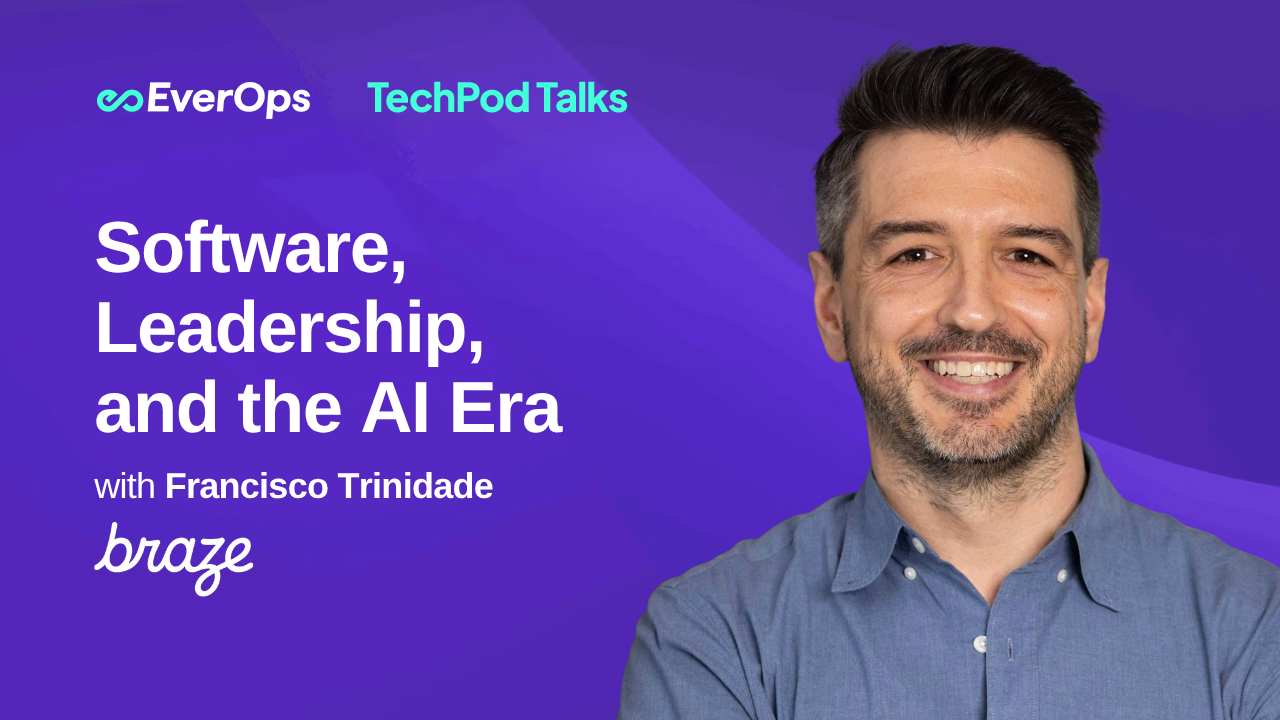
In this episode, Francisco Trindade, VP of Product Engineering at Braze, shares his insights on how AI is transforming software development, leadership, and education. We explore the evolving roles of engineers, the importance of understanding the system, and how leaders can create effective, adaptable teams amidst rapid technological change.
Main Topics Covered:
- The impact of AI on coding and software delivery, emphasizing that coding is no longer the bottleneck
- How agile principles remain relevant despite the decline of traditional Agile practices
- The changing role of software developers and what skills will stay crucial in AI-driven environments
- Lessons from entrepreneurship and leadership that endure through evolving tech landscapes
- The importance of system management over individual team members for successful leadership
- The shifting landscape of engineering education and whether computer science degrees will remain crucial
- Strategies for organizations to prepare for AI's long-term implications in coding, testing, and scaling
- Practical advice for early-career engineers to navigate a future where AI automates many tasks
Links & Resources
00:00:08 - 00:00:31 Stephen Koza
Every engineering team in the world just got the ability to write ten or even 100 times more code. But almost none of them are shipping ten times the value. Why? Well, coding is not the bottleneck. It's everything else. The reviews, the testing, the rework, the waiting. Now the AI is flooded the system with more code than people can possibly review.
00:00:31 - 00:00:55 Stephen Koza
You get a fork in the road. Either you figure out how to remove humans from the loop or watch somebody else do it first. Today I'm joined by Francisco Trindade, a VP of product engineering at Braze. His path is one of the most interesting I've come across. He started in Brazil, went to school there, co-founded a company, finishing his master's degree.
00:00:55 - 00:01:19 Stephen Koza
Then he spent six years at ThoughtWorks consulting shipping code across a number of different companies. Then he moved to Australia, co-founded a startup there and then ended up in New York, working at a couple other tech companies and most recently joining Braze in 2021. While there, he's been promoted three times. He's now one of the product engineering leaders there.
00:01:19 - 00:01:34 Stephen Koza
They're one of the fastest growing consumer engagement platforms in the world. They just hit 800 million IRR. He's also a big writer. He's a conference speaker and he's working on a book. Francisco, good to have you here. Welcome to TechPod Talks.
00:01:34 - 00:01:38 Francisco Trindade
Thanks. Thanks, Stephen. Thanks for the nice intro. I'm very, very nice to be here.
00:01:39 - 00:01:58 Stephen Koza
Thanks again for coming on. You and I have known each other, what, a couple of years now. We met at a conference way back when. Managed to stay in touch. I think you've got a cool story. And I've always appreciated your insights on what's going on in tech. Working for a big SaaS company. Certainly more recently with everything that's going on with AI.
00:01:58 - 00:02:11 Stephen Koza
But why don't we just start with career story? So you've been an entrepreneur. You've been in consulting. Now you're an executive at a public SaaS company. What's the thread that connects all of that?
00:02:11 - 00:02:35 Francisco Trindade
It's interesting. I think the thread has always been I think, from the beginning, I think how to make teams work or thing like that, and especially specifically like software teams, I think, like, I've always been interested in the idea of like kind of organizing work and making making teams effective, I think. Of course, when I started my first company back in college, I think that was maybe like not as clear.
00:02:35 - 00:02:58 Francisco Trindade
But I think you've been down like as we started, as I started learning the profession and kind of like just like having my it was like my first real job. What if I try to and ended up doing was a lot of which is like, how do I make this try to make this company effective? And then and and then I started out as like then I started to like to learn how to do it because, you know, like I didn't know how to write software.
00:02:58 - 00:03:13 Francisco Trindade
And I was like, no response. So feel like writing software in the company of like organizing software. I ended up learning, reading a lot of books, and at that time a lot of books were published by ThoughtWorks as consulting company. And that was like doing a talking about like agile and like D and like modeling and stuff like that.
00:03:13 - 00:03:34 Francisco Trindade
So after a few years of being inntrepreneur, I was just like, wow, I need I think my next step should be like to actually really learn how to do this. And I should apply to work at this company that I've been like reading, kind of like for like reading about it for like three years. And I was lucky to get this, kind of job in London.
00:03:34 - 00:03:54 Francisco Trindade
And I moved there, and I was like a great kind of like, I think that was my first kind of like, like long professional experience with people that are actually good to, like, kind of like mentor me and stuff. And that was like where I kind of like, like I think I learned a lot, like in the period, and ThoughtWorks was really about I was an engineer, so I was like writing code and kind of like doing technical stuff.
00:03:54 - 00:04:15 Francisco Trindade
But a lot of kind of like the overlay of everything that we did was about like going to clients and helping them be effective with software development. Both technically, but also process and like the and kind of thinking about that, as a high level. So and then I definitely had what I kind of like what I wanted to do.
00:04:15 - 00:04:22 Francisco Trindade
And that then kind of translated to like then another company and kind of like the leadership roles that I had since.
00:04:22 - 00:04:44 Stephen Koza
Interesting to lead. And or like you've got today versus trying to grow a startup. Compare and contrast that for me. What's it like, early in your career when you're developing leadership skills and then what have you learned along the way? That's, that's different. And what did you take away from those early experiences?
00:04:44 - 00:05:07 Francisco Trindade
Yeah, I mean, I mean, a lot is in practice is different as things scale more. Right. Like using like the day to day kind of becomes a bit different because, you know, like back then I was like writing a lot of code, no lag. So and like so that was like things like that. But I think being a founder was something that the, the thing about interesting about being a founder that you kind of wear multiple hats.
00:05:07 - 00:05:26 Francisco Trindade
So you're kind of you are kind of one day or maybe like one hour, you're like writing code, the next hour you like, think about this strategy for the next six months and raising money. And like that was the biggest I was at the beginning. Like a lot of that is just like you kind of have a taste of like leadership at different levels, being even within one role.
00:05:26 - 00:05:50 Francisco Trindade
And then I thing one thing that really kind of like I took from that, and the thing I continue to take is the idea of like ownership. I think like one thing that does know about, one thing that as a startup really teaches you is this like, there's no one else to ask for help, for help. A lot of times you just like, oh, it's like you have to figure out and that is something that I continue to take.
00:05:50 - 00:06:16 Francisco Trindade
I have continue to take like it's all roles that I had. And and it does help a lot because I think a lot of like the challenges of leadership are really kind of like there's this quote saying like leadership is making the invisible visible is just like is really like understanding a problem that is maybe opaque and kind of like quite not clear and putting it through a structure that you can solve, like they can work or against.
00:06:16 - 00:06:35 Francisco Trindade
And, and this is something that still I think happens like at braise we see a lot of like, race of course, is a much bigger company now, although we're still kind of like relatively small. We like 350 engineers, I think, like, so not like crazy big, but much bigger than than, like, the companies like, from the beginning, like Korea.
00:06:35 - 00:07:05 Francisco Trindade
And we still look, a thing when people ask me like, what? What are the traits that, engineering like this is have I think one of them is like the idea of, like, we have a lot of success with like, past founders or people that were like CTOs of startups or like cycle founders, because that that's to what skill, what is very valuable is just that kind of like, how do you kind of like get this problems that are happening around you and like, and can structure them and put it in a plan that we can align against and, and then work on.
00:07:05 - 00:07:09 Stephen Koza
Remind me your masters. That was software engineering. Is that right?
00:07:09 - 00:07:38 Francisco Trindade
Yeah. A master's in computer science. And it was mostly, it was an interesting I mean, so beginning of my career, there was a kind of, like, a peculiar experience, but, like, I studied computer engineering, and so that was like, hardware and microelectronics, and that was kind of like the thing that I. So I had a bit of software background, but not much like was a lot of work assembly and C plus plus and but I wasn't in any way like good at I knew how to like do web applications or something that or application in general.
00:07:38 - 00:07:56 Francisco Trindade
So when I started this first company, there was like a software. We decided to start this software company and the reason we kind of decided that was because it was we thought it was the only thing we could do that would kind of make us money without us having to put any money in it. So like, we kind of like to say, I mean, this was before a thing.
00:07:56 - 00:08:15 Francisco Trindade
Startups were a thing, at least, like in Brazil. And and the getting to a master's was a way for me to say, okay, I need to learn about, you know, I'm now like trying to write software that's completely different from, like, the assembly code I wrote in, like, my, graduate career, like, learning. So I need to learn from someone.
00:08:15 - 00:08:25 Francisco Trindade
And then getting a master's computer science was a way to just like, gotten all the people that would teach me and got to know, like the the kind of the concepts that I kind of I could start using, like in this new field.
00:08:25 - 00:08:54 Stephen Koza
Man, you're giving me PTSD. I did electrical engineering, so I remember the microcontroller classes and C plus. Plus, I wrote a lot of that. That was a long time ago. I don't know if anybody still write C plus. Plus, but, Yeah, who give me anxiety just talking about it right now. I'm curious, what did you what did you take away from the Masters that, has been useful throughout your career, either in the startups or, nowadays?
00:08:54 - 00:09:17 Francisco Trindade
I mean, I don't know if there was any thing specific, but it was a lot of, like, what I mentioned before. I think that was my first, like, far in computer science. Like, there was a lot that I learned in my master's was that I didn't like, like things that you could say, like our basic, you know, like just like like how the produces, like operating systems and like how they do work and like, what is like, how do you write applications or other layers of software.
00:09:17 - 00:09:37 Francisco Trindade
And so, so that was like things that like nowadays one would kind of like probably learn more, but like even like trying to become a letterer themselves, like self-taught on the internet. Like I didn't know that because one wasn't it is easier to find material, but also like everything I was like being taught was like language engineering and kind of things.
00:09:37 - 00:09:45 Francisco Trindade
Right. Rather of that. So it was really kind of like lower level concepts that, I needed to kind of like rethink to kind of like structured write software.
00:09:45 - 00:09:51 Stephen Koza
Do you think the traditional comp sci degree path is still going to be a thing, or is that going to change?
00:09:52 - 00:10:13 Francisco Trindade
Interesting question. I think there's a question like, degree, is there going to be a thing or are they going to change in our capacity? Degree is the a thing I think I think degrees I don't know, maybe that's I'm not completely sure what that but I do think the is still gonna continue to this for like even because of the inertia of like those exist and like the, the education models that exist.
00:10:13 - 00:10:36 Francisco Trindade
So like, yeah, I think they're useful in a lot of senses, like for like, forming, kind of, people and, and just to study the comp sci degree I think is going to I think that even exists, I think is going to be different. Right. But I'm sure I, I'm sure the comp side degree from like 2025 was, is very different from the one I had in like 2000, like five.
00:10:36 - 00:11:01 Francisco Trindade
So I think that's it has been changing. Right. Is going to continue to change. That's the tools and what we need to learn to become like engineers or whatever builders or whatever, we're going to be a thing in the next or in the next decade or so. But I don't think ultimately we're not going to escape the fact that we're building software on top of hardware that needs to like, run and scale and kind of like, and so someone isn't all that.
00:11:01 - 00:11:04 Francisco Trindade
Right, and nothing. So I sort of stand out. So.
00:11:04 - 00:11:31 Stephen Koza
Yeah, I always think, despite the fact that I've spent most of my career on the business side, having those early engineering experiences either in school or right when I was out of school. Now that you can code things with AI and write way more code, way faster, the fact that I kind of understand what that code is doing and how it's organized, and the the systems approach to it, it's really useful.
00:11:31 - 00:11:47 Stephen Koza
So yeah, I'm kind of with you. I would imagine that, you know, maybe what you learn changes a little bit and how you learn is going to change a little bit. But degrees makes sense for a bunch of reasons, or at least the the education that you have to do to get the degree.
00:11:47 - 00:12:07 Francisco Trindade
And I think the idea of like that, that's that principle of like, you need to understand one layer below, what do you where are you working on? I think still is valid. Right. I'm saying like the like you're going to be a better prompt engineer or builder or something if you understand the code that's been generated to some extent and you can manage that.
00:12:07 - 00:12:20 Francisco Trindade
And yeah, I think there is a complex sort of managing that call that what here? I mean, as we talked about, I, we can talk about that, but I think those skills are definitely not kind of going away as AI becoming useless, anytime soon.
00:12:20 - 00:12:35 Stephen Koza
As it could take. I like that. Let's talk about entrepreneurship a little bit. So you founded a company in Australia? Your grocer, if I'm not mistaken. Tell me a little bit about the story. And, what was what was that journey like?
00:12:35 - 00:12:53 Francisco Trindade
So maybe just going back a bit, I sorry, as I mentioned, like, I joined this consulting company, I was like, doing a lot of, like, work and, and I had had a startup before. So I think within the consulting, I was also attracted to like work in startups. And I was able to like within our process. Sorry.
00:12:53 - 00:13:22 Francisco Trindade
I think like my consulting years like to work with startups and some startups and also like I was that was, the time of Lean Startup. And I if you read the book, I remember that's kind of like the whole ordeal process and stuff like that. So, I was also like doing a lot of at the end of my consulting years, I was doing a lot of kind of like innovation labs and helping companies kind of like do like Lean Startup, kind of like, cycles within, like enterprise and stuff like that.
00:13:22 - 00:13:53 Francisco Trindade
So that, kind of like made me like working on that field and working on those kind of like, kind of like, types of, like engagements. I was like, always like, was attracted, like, I need to do a startup again. I was like, learning a lot about like or like Lean Startup and how to do it and the process and things, things I didn't know in my first go off, like my first company, which was I wouldn't call it a startup, but it was like a business that we started that we knew nothing about how to start a business.
00:13:53 - 00:14:30 Francisco Trindade
And I think like, so here it was like six, seven years later, I knew much more and I was always like, I need to go do it again now with, you know, now could I with some idea of what to do. And then, I was in Australia. Australia is, is one of the characteristics of Australia. I was like, this is very, very, highly concentrated supermarket industry of like, I like those two, two brands that kind of almost of the market like I percent at the time, I was like 80% of the market and or I'm at is, my co-founder who was starting this business about like building, kind of like
00:14:30 - 00:15:00 Francisco Trindade
a delivery system for like a dependent, dependent grocer, independent founders, and then trying to compete, I guess, providing a digital kind of like digital channel for, like, all these kind of those that wouldn't have a website and have like deliveries of that and tried to get them to compete with supermarkets. So that's what was the idea. And for me, as I went, I, I like the idea or like the kind of like the, the mission, but also like I wanted to to do it again and really kind of like and do it kind of like from a better position and, and we did that.
00:15:00 - 00:15:25 Francisco Trindade
We kind of like, I was at the company for like six years. We kind of grew to I think you kind of went well. And the company still exists, like I think we are now like 15 years later. I think like the company still was operating, but we kind of, we never were able to scale it to as much as we want to because like, the it was like you're trying to scale logistics business in like, a low margin, environment.
00:15:25 - 00:15:48 Francisco Trindade
So, like, you just we need a lot of cash so we know what we're able to raise. I think that, in Australia at that time. So. So it was like a great, but it was a full experience of, like, being a at the time, being the tech co-founder, raising money, kind of like doing a team and kind of like just like a much more like structure experience of a startup that was like literally, I was I mean, it was an exciting time, was a great time for my career.
00:15:48 - 00:15:50 Francisco Trindade
So I really enjoyed it.
00:15:50 - 00:15:57 Stephen Koza
Any lessons or big moments you kind of figured out back in those days that you still carry with you today?
00:15:57 - 00:16:22 Francisco Trindade
Yeah, definitely. I mean, many I think one that I usually, tell people is like the idea of, like understanding the customer problem. Like, we in this end, your customer like. And the way kind of like this was a beginning of our journey. Like we we started this business. And so we started this, like, side the business thinking about, okay, we're going to, we're going to sell to people like ourselves.
00:16:22 - 00:16:43 Francisco Trindade
So we were like, you know, like 25, 30 year old, like single, kind of professionals. I'm gonna say, like, we're gonna like, be this, like, we're going with the customers, right? We're going to we need this thing, and we like to cook. So we built the first version of a system we had like a bunch of, well, kind of a handful of clients, and like, that kind of like, started, like repeating process, like that.
00:16:43 - 00:17:15 Francisco Trindade
And we decided to do a series of interviews, with them to kind of on what's happening. And because they're all like in we're in Melbourne, Australia, like we all there like in close by it was all delivery. So it's like kind of within our neighborhoods. So like we're like we were they weren't very far from us. So we booked like probably like 1050 interviews in their homes, like so we just like we would go to we put time and just like have a chat, we kind of follow there's like jobs to be done method, which I still, I still think is like was kind of it was really kind of useful, like the
00:17:15 - 00:17:43 Francisco Trindade
job, the jobs of the interviews. But the thing that we where we started going to the houses that we kind of like, I think the third, the fastest video, we just realized, like, all these people are moms with kids. They were kids. It was obvious, like all their kids everywhere, like every time we go. And it was such a, I mean, basic but obvious revelation to us like that we, our target market was wrong and we just like the assumption we had of all the business.
00:17:43 - 00:18:08 Francisco Trindade
And of course like this, I think I'm not saying this happens. That level of like misalignment doesn't happen, I think, on a corporate environment, because companies are just better at that. We were at the time. But there are types of misalignment like that to happen of like we just like you don't really you know, you I think it's still very common to have like breaks or communication between product design engineering, data engineering.
00:18:08 - 00:18:35 Francisco Trindade
At the end of the day, engineer at the end of the line doesn't know exactly the problem they're trying to solve. And then you kind of like look at it and it's like, oh, would build the wrong thing because there was an obvious mismatch of like, office within the standing. So this idea of like end to end understanding and the sense of the problem and the customer that something is still taken day days and still is, it's incredibly, still a fresh concept.
00:18:35 - 00:18:39 Francisco Trindade
Or that is then it was like, kind of like 15 years ago.
00:18:39 - 00:19:01 Stephen Koza
Yeah. That one always cracks me up because understanding your customer, it's so easy to say it's kind of painfully obvious. It's also super easy to miss and super easy to think you do, but you actually don't. And you didn't do the work to do it. And so, yeah, I've, I've heard that lesson learned a bunch of times from a bunch of different people.
00:19:01 - 00:19:26 Stephen Koza
So that one doesn't surprise me. Let's, let's jump into leadership a little bit. So you've been a leader throughout your career in different ways. Startups, consulting now Braze, you've been promoted a few different times there. So pretty different environments. Tell me a little bit about your leadership style and how has it evolved over the years and across the different types of places?
00:19:26 - 00:19:50 Francisco Trindade
Yes, I think like there's ways that it has evolved in a way is that it has. And I think as you, you kind of like grow through your career. And I think I actually like, wrote about this, in a blog post, a thing a few years ago. Is this, like, the more you kind of like progress, the more you have the confidence in what you believe in, because the last is going to be a structure around it.
00:19:50 - 00:20:21 Francisco Trindade
So like, you know, if you're a manager, if you're managing a team that has needs to be company, like there's probably like a lot of rules that you have to follow and you can kind of follow the rules and, and that someone is going to lead you to do that. The more like you kind of progress. I think the more than like there's less advice and you say like, oh, maybe if you're a manager, you're, you're, you know, managers probably give you a lot of like direction if you're a senior manager, maybe a bit less if you're a director, like now, you may be on, like a result that's like meaningful.
00:20:21 - 00:20:44 Francisco Trindade
If then you've like, if you got to like, senior, like director VP, you know, you're managing it like a lot of you are at this point, like people are giving you direction, but like how things are going to be done is like kind of like up to you in a lot of senses. And, and the thing if you don't have conviction, then you end up having this, you might end up creating this organization that's that disjointed.
00:20:44 - 00:21:03 Francisco Trindade
Right. Because like kind of like there's no real principles that are being applied consistently. Anyway, I like and I think that is so being able to structure that kind of like in, you know, in a way that people can understand and trade like principles, the kind of like people that the teams can follow and things can work well.
00:21:03 - 00:21:21 Francisco Trindade
I think that's a challenge as you, as you, as you grow. So that first of all, the thing. And that's something I think I have learned a thing throughout and throughout the process. But I think, you know, like I found myself many times, like, are you just asking like, you know, like why why is this situation not different?
00:21:21 - 00:21:42 Francisco Trindade
And realizing, well, I'm the person who should be changing it. So, so as like so that is, be that conclusion. So I think that's like something to, to learn at the same time as in the job itself. The core of it and the thing going back to like the book, I think that's like the way I think about, like the core of, like, leadership.
00:21:42 - 00:22:02 Francisco Trindade
So the same which is like, you need to organize a group of people to deliver value as effectively as possible. And the tools might change with, like with kind of like as you progress. But like the core of what you're trying to do is the same. And I think the, the thinking you have to use is kind of same, which is like, think about, think about the end to end value.
00:22:02 - 00:22:27 Francisco Trindade
Think about like effectiveness. Think about like team output versus individual outputs and anything. So I, I talk one thing I've been trying to kind of talk more about the idea of like a manager being the micro CTO, right, is just saying, like you're kind of like you are the owner of your team, like you should. The more you can behave like that, the more successful you're going to be, because the more you're gonna feel the power to, like, change the things that we change and kind of adapt things as they need to be adapted.
00:22:27 - 00:22:36 Francisco Trindade
So. So there are things, that answer a question. I think something's evolved. I think some things remain the same. I think like, like, throughout the years.
00:22:36 - 00:22:46 Stephen Koza
On that note, is there anything you used to believe, early on that you realized either was totally wrong or you just decided to abandon.
00:22:46 - 00:23:12 Francisco Trindade
I think something I used to believe there's I think there's, like, things, that I definitely applied much more nuanced or had, like, I think the, you know, I'm, you know, you being an engineer, if you follow that, I feel like I like to things to be very structured. And so I, I think engineering has, you know, it's like studying and like engineering, I think gives you grace.
00:23:12 - 00:23:39 Francisco Trindade
It gives you that structure of saying, okay, everything is a formula. Everything is a number. I think maybe like there's like mathematical kind of like, kind of like, explanations for everything. And, and that structure, when you put that to a position where you're actually, like leading people and like that have their own beliefs and they all kind of ways of thinking about that, that becomes something you have to adapt.
00:23:39 - 00:24:05 Francisco Trindade
And I think so a lot of maybe like, not that I completely kind of like, have completely changed, but I think and what I had to learn a lot and I think adapt a lot to just add know, like, how do I, how do you provide the right amount or the read model guidance and direction. But like still kind of like, not expecting everything to be perfect because nothing, nothing is ever going to be perfect.
00:24:05 - 00:24:25 Francisco Trindade
Right? Like and kind of like being able to control that. I think the other thing that maybe like the other the second thing I would say I and this is maybe like, like a bigger lesson I learned. The thing is, they need to have to. You really have to, there's there's a cost of, like, energy of doing things.
00:24:25 - 00:24:44 Francisco Trindade
And the more you try to do, the less effective you're going to be added to a point. The you become ineffective. Right. And I think there is something that has happened in my career. It was like being positions of like, you know, you solve a few problems and people think you can solve every problem. They say, well, maybe like solve all this or the ten problems that you want to help.
00:24:44 - 00:25:20 Francisco Trindade
So you say all out or in my case, I want it. So yeah, I'll try to tackle everything. But then at some point you just like become ineffective at all that and kind of like you risk like your you just like it doesn't work. Right. And I think that's something so trying to one just like maybe like summarizing the thing you're trying one to kind of like understand how strongly you should work for things and try to create a principle, things that, kind of like, accept the, like the, the kind of like the nuance of, like leading a group of people or like the kind of like challenges are going to come
00:25:20 - 00:25:34 Francisco Trindade
with that. And the different opinions are going to come from that, but also like limiting the amount that you want to like, tackle at each time. So that doesn't become like, you know, it's like you, you like become ineffective in the process and like, just like risk it all.
00:25:34 - 00:25:57 Stephen Koza
Yeah. If you're focused on everything, you're focused on nothing, right? Speaking about leadership some more, I know you've done a bunch of writing, one of one of your pieces I caught, I'm going to quote engineering leadership is managing the systems in the team to make people within it successful instead of the other way around. That's pretty interesting.
00:25:57 - 00:26:02 Stephen Koza
I wonder if you could explain that. And maybe, if you have any examples to go along with it.
00:26:02 - 00:26:26 Francisco Trindade
Yeah. So I think like, that is, I can definitely explain and definitely find your examples. I think one of the, I think principles of, team leadership, I think that, to that, to the example, to the thing, the topic from before, I think a simple at face value, but not kind of like simple in practice is like you're managing a team.
00:26:26 - 00:26:47 Francisco Trindade
So the result of the team is the thing that you're responsible for. And of course, the team is composed of individuals and they all have succeeded. And the thing and they're all like people that have aspirations, and they need to be kind of like, you need to like, take that into consideration. But the I think there is like two ways to approach engineering leadership or like team leadership in general.
00:26:47 - 00:27:07 Francisco Trindade
Is that like you think about the team as the unit that you have to to, to, to make effective and then you adapt that to the people that you have. And that is the thing. One, the easiest way and I think the most effective way, the other way is that you think about the people first and try to match.
00:27:07 - 00:27:29 Francisco Trindade
What they want to do is in the team that you have and or the situation they have, and and that becomes like a complex puzzle to, to, to manage. And I think the other kind of like, part of that that most people, I think, take for granted and is that like as a leader, you get a lot of freedom by delivering results.
00:27:29 - 00:27:45 Francisco Trindade
So like, it's it's kind of like what I tell, the manager that I work with today is just like the way for you to have, like, no one paying attention to what you're doing is like, you just you just deliver the results that you like. You, we ask you to deliver because that is the main goal, right?
00:27:45 - 00:28:10 Francisco Trindade
Like, and then if you do that, then you, you gain a lot of like freedom that you can offer to the people that you manage because you can say, well, I, you know, you can run more of your own show because you know, you're delivering what needs to be delivered. On the other hand, if you fail to the results, then you get a lot of scrutiny in what you're doing, and you're probably going to get a lot of opinions about how you manage your team.
00:28:10 - 00:28:31 Francisco Trindade
And that creates like constraints up. We're going to be on you as a manager or as a leader, but also going to be in your on the team because now they're going to be under like some, like some, some heavy constraints. So so that's what I think about. Like when you're managing a team you like a leader should be think about the system or maybe like the how the team works and that like that.
00:28:31 - 00:28:48 Francisco Trindade
Making the team successful will make those people, the people within the successful because they're going to have more opportunities, of course, because you have to have more freedom, but also because as you deliver results, like the more you deliver, the more challenges you're going to be given to you as a team. So there's more opportunities for people. And so that becomes like a virtuous cycle.
00:28:48 - 00:28:53 Francisco Trindade
Well, like, the other way around, you kind of end up like more easy, end up with blockers on your part.
00:28:53 - 00:29:06 Stephen Koza
Yeah. Well, one of the common things you hear is, you know, you create the roles and then figure out who fits in, not not the other way around. So I, to me, this sounds like an extension of that. I like how you think about it.
00:29:06 - 00:29:37 Francisco Trindade
Yeah, exactly. I think, I mean, there are plenty of examples of that, but like, I have an example that happens, like in the past I thing, which is, I, there was a particular engineer in, a past company that they were very they were like brilliant, but in, with pauses in between. They're brilliant for like though, like they have, like, moments of really brilliance that would deliver things.
00:29:37 - 00:29:55 Francisco Trindade
I was like, nobody believed that could be possible. But they weren't great at just delivering the normal, like, work. Like they just like were like they would get distracted. They're like just like struggle to kind of like follow the team process and stuff like that. But that was, and that was a challenge like that in the team.
00:29:55 - 00:30:15 Francisco Trindade
Is the challenge, right? Because it kind of like, how do you kind of manage those things and how do you adapt this, the kind of the work of this person to, to that. But but the situation was that because that team was doing so well, like, and because like effective leadership within the company trusted me to manage it.
00:30:15 - 00:30:41 Francisco Trindade
Like I can manage very well the situation however I wanted so I could and effectively what we did was like we kind of had some level of like an agreement of like they where they could participate and where how they would participate, but also I would provide more opportunities that were like, kind of like, more shaped the way that they wanted to, that they would like, work well, which were like kind of like launch like moonshots of things that we kind of wanted to do.
00:30:41 - 00:31:03 Francisco Trindade
I maybe wanted show to do, and this person would be like doing that, but I only could do that because I had slack on, kind of like, like I wasn't thinking about, like, you know, how many story points you're delivering. I think, like the team and that kind of like because the team was working at the team was like sitting like, everyone can respect that.
00:31:03 - 00:31:21 Francisco Trindade
And they understood the contribution of this person because they were they would every once in a while, like do things that were like really kind of like help a lot. So but that is an example, a situation that wouldn't exist if I was being like micromanaging or if like there was like, like micromanaged by like my manager. Right.
00:31:21 - 00:31:51 Francisco Trindade
And and that can only exist because that space was created, I think then then the other situation also like have many examples of like managers that will be very you. Yeah. I think we have like sometimes like, we talk about patterns of that, like within within leadership of like you have managers that are very well regarded by the reports because they affect the, like.
00:31:51 - 00:32:30 Francisco Trindade
Listening and trying to provide exactly what the reports are asking for and trying to, like, defend them as much as possible and protect as much as possible. But then because they create a ineffective environment around that, like it doesn't work. So you kind of have this like there's almost like once we, we look at like looking at like kind of like the, the effectiveness of a leader, like having results that are overly positive, like from like a bottom up kind of like perspective combined with like results that are not very positive from a delivery perspective.
00:32:30 - 00:32:47 Francisco Trindade
Like it's almost like a, like a pattern of like just saying this happens kind of every, every once in a while and is like and points to this, this, this kind of kind of the individual focus perspective on management. Right. And like that's kind of like my creating effective teams.
00:32:47 - 00:32:55 Stephen Koza
And then I'm curious, the person you were talking about, how they work out, did we're able to retain them and make them productive.
00:32:55 - 00:33:18 Francisco Trindade
And still retain still productive and still kind of like the same way that kind of like they were before. And the thing is, and that is like, this is actually something, it's fresh on because I'm, writing like I wrote in the book, but like when I started career like, and it was like, it's awesome because I was like, this was like the heyday of agile transformations, right?
00:33:18 - 00:33:39 Francisco Trindade
So a lot of companies are going from like this kind of pre like more small waterfall or more structured way of like working where like people are like working on requirements and stuff like that to like this more like agile environments where like we're like more social and you have to collaborate more and you had to like be there and talk to the product manager and stakeholders.
00:33:39 - 00:34:03 Francisco Trindade
And that was like much more like, do you know that sense? And I and there was a pattern that I saw of like the very there was a lot of like very technical people that were essential for teams that would now struggle because they just weren't good at dealing with stakeholders. Like that was like not their skill. Their skill was like to write the best code that the team had, and had like the technical insight.
00:34:03 - 00:34:29 Francisco Trindade
And they were end up like struggling because they were being put in the system. There was like putting them into boxes of saying, okay, you have to be like this to be successful, right? And I think I always, I always find this strange because like, who would go to clients and would be like, oh, this person is clearly the most technical person we have and we like they are essential for the sake of this project work, but they are being like put to the side because they don't have like they, they, they not so eloquent.
00:34:29 - 00:34:51 Francisco Trindade
Yeah. They're just like, this is not the right decision, right. And I think that's like a challenge of like not managing the system. I think if you manage the team as a team and as a group of people that all have different skills and strengths, like then your job as a manager is to as a leader is to figure out how do you fit this pieces into a cohesive team.
00:34:51 - 00:35:10 Francisco Trindade
That makes sense, right? Like and that means you might have to allow some people not to do parts of the job and get them and cover for them and but get other people to kind of like and kind of match that. So that becomes effective. And, and because people are different, the job is always different, which I think is the interesting part of leadership, right?
00:35:10 - 00:35:21 Francisco Trindade
Is just like you are every you can say the same job for ten years, and the job is going to be different every year, right? Because just the people around you, the context and the challenges are different.
00:35:21 - 00:35:35 Stephen Koza
Every time you mention agile. I don't want to use that to shift into the AI conversation. I've got some other questions around AI, but what do you think happens with agile? Is it here to stay? Does it change? What's your feel on that?
00:35:35 - 00:35:58 Francisco Trindade
I mean, I guess it depends on how much. What do you think has happened with Azure? I think like agile I mean, I stopped using I use agile to for something in the past because I think like we have overall in the industry, like let go of it in some sense. I think we all do kind of like follow some iterative process and then some extent, you know, a lot of like companies and most companies.
00:35:58 - 00:36:27 Francisco Trindade
And so we work on the principles of that. But the thing I avoid using the term agile is something that happens currently because that creates reactions that I think are not ideal because a lot of people are put into, like this, agile transformations that were like just not successful anyway. But this is I digress. So I think like but I think like if you talk about like what, what's going to happen to the AI with what we have right now, I think, I think this is I mean, this is the, you know, multimillion dollar question to begin with.
00:36:27 - 00:36:55 Francisco Trindade
So I'm not saying I have the answer that, but I do think that the principles remain. The principles is like, like there was a team and the same might be smaller, might be larger, but the same. This deliver value and value is software running in production somewhere like to deliver some value. So that's the exist. So I think the idea that you have to understand the customer, you have to understand kind of like the, the guy has been selling on Twitter and you have to get this people to collaborate.
00:36:55 - 00:37:18 Francisco Trindade
I think that's the OG, b situation. I think to some extent what this situation is, is I kind of revolution is bringing is a lot of the principles that existed in these agile transformations, because you're kind of like what AI is kind of like making the very obvious now is that coding is not the bottleneck of software.
00:37:18 - 00:37:42 Francisco Trindade
And that was the principle that agile was built upon. The idea of like the coding is at the bottom. Microsoft, even when it was like manually kind of like created. So, so I think a lot of those principles are being are back. And you can see it was things like, you know, there like even practices that were kind of becoming it was like people are talking more about planning together, which is something that existed like more in agile.
00:37:42 - 00:38:00 Francisco Trindade
Do people talk about like writing more specs to kind of make sure the code works? And you can guarantee it, which just again, like that was like TDD and all the stuff that came from the agile, like kind of like movement. So and that's because the principles are still the same. The principles are still are there. You need to deliver value through software and like and that hasn't changed.
00:38:00 - 00:38:24 Francisco Trindade
Now the coding part has been reduced, which I think is creating the the question like where the bottlenecks going to be. And I think we're seeing different things happening in terms of like, you know, product design maybe sometimes being a bottleneck, but also like there is this kind of like sometimes expansion of, like coding of, like people running, people trying to do a lot because they can do a lot now.
00:38:24 - 00:38:46 Francisco Trindade
But that becoming distracting, through like through the ultimate goal that you're trying to deliver and how to adapt to that. The thing is the big question in what companies need to do. But like my maybe like, kind of perspective was like what software engineers were doing before are doing now hasn't changed which or should have changed.
00:38:46 - 00:38:51 Francisco Trindade
And that was the lever value to software. And that's something that we're still going to need to continue doing.
00:38:51 - 00:39:09 Stephen Koza
Yeah that's a good take. I like that. So if coding isn't the bottleneck, super easy to generate tons of code. Now I know you, you wrote a piece recently where you talked about this. What is the bottleneck? What? What's broken that needs to change?
00:39:09 - 00:39:33 Francisco Trindade
Yeah, I think, like, I mean, the August bottleneck that's happening is like, you know, now everyone's like, what's within the with code reviews, right? Which is I think now the question is like, can we get rid of code reviews at some point? Because we, you know, we trust agents to write code consistently. Well, and we have systems to prevent them from things from going wrong, which I think is very likely and probably what most startups are doing right now.
00:39:33 - 00:39:52 Francisco Trindade
If you're starting a company now, you're probably like not even reviewing code. Like you're just right because you're trying to move fast. And I thing and you also hear from like if you look at, like larger companies are trying to adapt the thing, in some extent, I think the challenge becomes a greater for like, I think for the startups, like, can you can you maintain that at scale?
00:39:52 - 00:40:13 Francisco Trindade
Right. I can, you can as you it's easy to write a bunch of stuff. You have like five agents running in a greenfield project. What if you have 100 engineers and you have it junior has a five agents, runny nose, 500 agents, and the code base is now 2 million lines of code, like, how do you maintain coherence on that code base as you and just like quality as you grow?
00:40:13 - 00:40:34 Francisco Trindade
And I think that's still going to be a challenge in the end will be a software engineering challenge. So we're going to have to figure out. And then the other side of this question is, for companies that exists, like, like, that are running like revenue generating kind of like systems that if they break, they cause revenue issues.
00:40:34 - 00:41:02 Francisco Trindade
How do you get how do you create kind of like, structure around your code in a way that you can provide more freedom to agents and can you do that? I think that is an interesting question, because I think any attempt to do that's a long term strategy in engineering. And if you invest a lot of that and you probably don't get it, maybe that investment is not the best investment to make.
00:41:02 - 00:41:25 Francisco Trindade
So there is a bit of a principle. What I the reason I wrote a piece because I do think there is like a interesting like, moment where like companies need to, like, have a vision of what's going to happen in a strategy. And if they don't, they might get there might be there's little company amongst like much faster companies moving in the right direction like in a few years.
00:41:25 - 00:41:28 Francisco Trindade
And that's like not place you want to be a fast.
00:41:28 - 00:41:54 Stephen Koza
What do you think about the role of, software developers say everybody's using agents now and it's pretty easy to produce code. So what if your job is still deliver value, get software into production. What's the job look like? What does a senior engineer do and what does that mean for how you hire them and motivate them and assess them and reward them?
00:41:54 - 00:42:17 Francisco Trindade
Yeah. I think like, it's a good question as well. Like, I think like, I mean, one rewards I think a lot of companies now, maybe like I'll probably say that's a list. The aspire standard is like think of the impact as like the reward mechanism of like how much you an impact is something that's, you know, an approximation of value.
00:42:17 - 00:42:34 Francisco Trindade
So I think that continues I think it's going to be there's going to be some recalibration of what that means, because I think a lot of companies have a will have always takes that match impact to kind of like how much code they're like, oh, for to like outcome to output in some sense. And those six probably are gone at this point.
00:42:34 - 00:43:01 Francisco Trindade
So how to recalibrate. That's going to be an interesting challenge just for companies like this year. But but this essence of it continues. I think the job itself, I think it depends like, in some level, I think the, the what a lot of levels the abstraction is going to go up. Probably you're prompting and you kind of like, like thinking about kind of like more like the requirements and kind of like how to deliver value.
00:43:01 - 00:43:19 Francisco Trindade
And I think there is going to be some level convergence of roles of like, and all the engineers can do some design and the designer can maybe write some code to the product. So all of that can they can converge more, which is I mean, again, like I think it's positive because the convergence of those numbers are converging towards delivering value, which is great.
00:43:19 - 00:43:49 Francisco Trindade
I think there's still going to be a lot of software like considerations, like in the sense of at least for the foreseeable future, but at least for like the short term, I saying like of like it is, how do you run like hundreds and thousands of agents writing code at the same time? And what kind of testing do you need and what kind of release process they need, and what kind of review do you need, and how do you organize technical architecture and, and all of those things that are engineering problems that are unsolved now.
00:43:49 - 00:44:06 Francisco Trindade
So I think like that that's not going to stop, at least for like, you know, as far as we can see in the future, which I know can maybe it's not that long, but I think it's probably going to be, at least a few years into that, that we kind of evolve and that doesn't become, much better.
00:44:06 - 00:44:27 Francisco Trindade
But it's at some point, I think, like you, you're not think about software as a static thing as well. Like, it's not like you write like a piece of code and it's like, is that forever is like the challenge of software and the challenge the, you know, the essential complexity of software, which is like since, like Fred Brooks wrote, the book, is like software keeps changing.
00:44:27 - 00:44:50 Francisco Trindade
And I think and that's going to keep being a problem or someone or something. So he's going to be like someone or or something that you wrote the someone wrote the rules for is going to have to manage that complexity and keep that coherence. And so there is a point where you need some level of like intervention to that to decide what to do.
00:44:50 - 00:44:51 Francisco Trindade
Right?
00:44:51 - 00:45:06 Stephen Koza
Yeah. Well, I'd love to talk about AI for another couple of hours. But to wrap up here, tell me, is there a piece of advice you've gotten that's really just stuck with you and maybe even find yourself doling out from time to time?
00:45:06 - 00:45:28 Francisco Trindade
Yeah, for sure. I think one that's relevant, nowadays is, since the get into got some AI into. I once went to a, you know and was my career. I didn't know I want to do like most people done and, and I went to this, like talk that the speakers had like something that second year idea like, careers that make sense.
00:45:28 - 00:45:44 Francisco Trindade
Looking forward. That makes sense. Looking backwards. So I'm saying, like, you know, and their perspective is like, you don't know what job is going to exist in five years. So what's the point of like trying to say you're going to be something five years, like what you should do is like, decide what you want to do now, do that as best you can.
00:45:44 - 00:46:03 Francisco Trindade
And then like the the accumulation of your experience is going to make you unique in the future. Right? And then that then that position is going to make sense for you because you have all these experiences that you chose to have throughout your career. And I think right now is, it's that's very relevant because, like, people will talk about what's going to be the, the role of the software engineer.
00:46:03 - 00:46:25 Francisco Trindade
How do I do that? Not like, I think do the best what you can now and learn from the process and that there's going to be a new role, a the existing role in your role or some different wherever. And, the role is going to exist in the future. And the more you can like, target yourself or like learn throughout the process, the more you're going to like, do the best you're going to do of that.
00:46:25 - 00:46:47 Stephen Koza
Yeah. You know what? I love that because one of the things I don't know if I ever got this advice, but eventually it I realize this. And now it's advice that I give to folks that are earlier in their career, which is college kids are guilty of this, especially the ones that are high performers. And, you know, they think they've got to have their whole career mapped out.
00:46:47 - 00:47:15 Stephen Koza
And they're so anxious and worried about that first job. And picking the right one. And I'm like, don't worry, I go try something. You can pivot along the way. And medicine and law maybe are the two exceptions to that. But other than that, don't don't worry about it. You know, I, I studied engineering and pivoted pretty early in my career, and there's a million stories like that, but I never connected it to what you just said, which is what's going on now.
00:47:15 - 00:47:19 Stephen Koza
And yeah, careers and careers and jobs are gonna be way different.
00:47:19 - 00:47:51 Francisco Trindade
Exactly. I think like one I don't know if it's, maybe it's a hot and how much or how it's like it is, but like, there's a lot of this kind of like, kind of talk about, like, all the junior engineers, they are doomed. And I'm thinking, like, when I was a junior engineer, the like the technology was solid there, like the amount of revolutions I have gone through my career, of course, like this is a big one and but it's just like, you know, in the beginning of career, we would spend like a week of six people trying to build a build server so we could like, commit code, right?
00:47:51 - 00:48:10 Francisco Trindade
Like, that's like that was like a hundreds of thousands of dollars investment like that is how much I'm involved with that. And we had to learn it like people had to learn this period. Like I think generally the other guy learn and they're going to be fine doing whatever they need to do in like five, ten years, because that's what that's what we all do, right?
00:48:10 - 00:48:32 Stephen Koza
Yeah. I, you know, the advice I like to give is just like, go build something a company, a product, a software tool, just get comfortable with being creative and figuring out stuff that you don't know how to do. And of course, there's communication is helpful. And if you can figure out how to sell something at some point in your life, that'll probably serve you well.
00:48:32 - 00:48:40 Stephen Koza
But yeah, a great point about what's going on with AI Francisco. Appreciate you man. Hey, to wrap up, you wanna tell everybody where they can find you.
00:48:40 - 00:48:56 Francisco Trindade
The best place. Now I'm in, like, on LinkedIn. Probably like you can find me there and like, connect and I. That's a good way to, like, keep in touch and, like, with things that I'm doing. But also I have a, like my blog and kind of where I publish a lot of is like on medium.
00:48:56 - 00:49:12 Francisco Trindade
So is, at Francisco, MD. And there you can find out if things right. And as I, in the near future, I got this book right in and out. I think that's where, like, things are going to, the news are going to be so the best place.
00:49:13 - 00:49:20 Stephen Koza
All right, man, we'll put that stuff in show notes. This was fun. I appreciate you joining me. I was good, good to catch up and get your hot takes on everything.
00:49:20 - 00:49:23 Francisco Trindade
Thank you. Thanks so much. Thank you. Stephen.
00:49:23 - 00:49:24 Stephen Koza
Right. Thanks, Francisco.
.jpg)