Episode Description
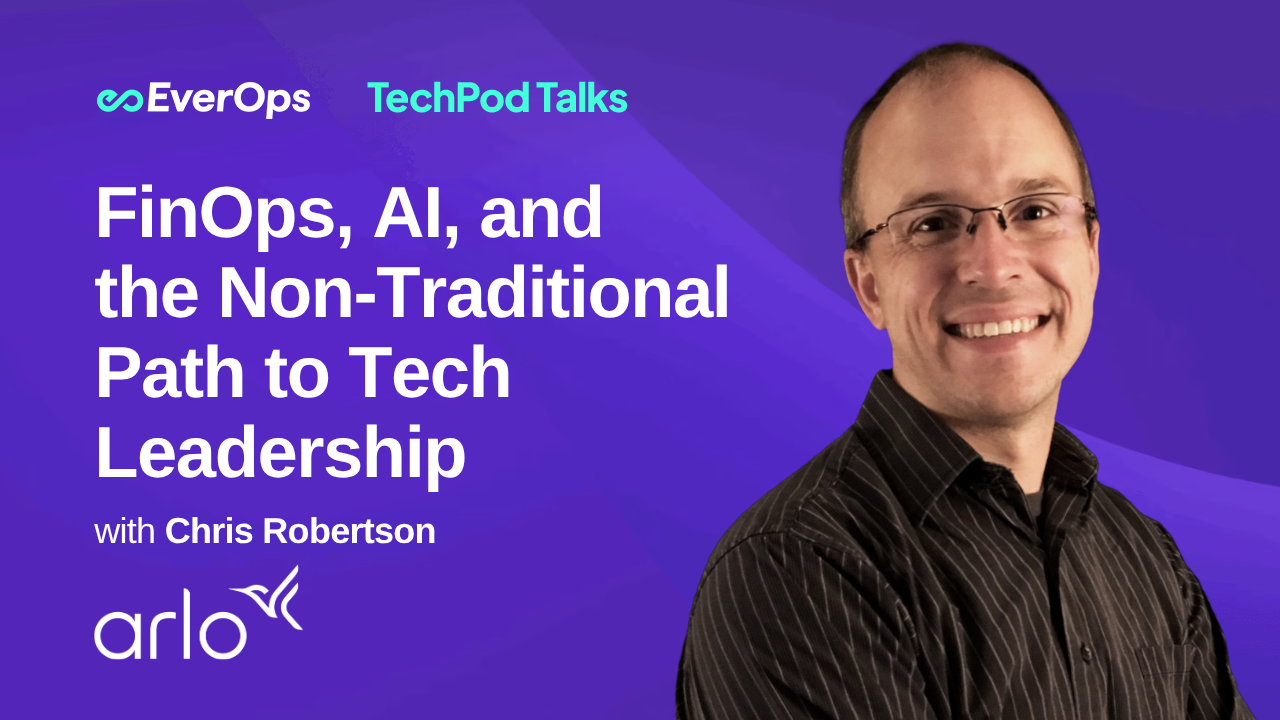
Explore how top tech leaders, like Chris Robertson, leverage unconventional career journeys, self-education, and cutting-edge AI strategies to achieve remarkable success in tech industries. Gain insights into building resilient teams, optimizing cloud economics, and fostering innovation through rapid experimentation.
Main Topics Covered:
- The power of self-learning and non-traditional career paths to reach executive levels
- Key decision-making factors influencing career moves across fast-growing tech companies
- Reframing FinOps from just cost management to a company-wide efficiency enabler
- Practical approaches to implementing reliable platform and service availability upgrades
- The importance of chasing small wins for organizational momentum in tech transformations
- How to prioritize AI use cases with measurable ROI and rapid iteration strategies
- Managing the rapid evolution of AI tools and the importance of flexible stack planning
- The human element in AI adoption: overcoming fear and resistance with training and examples
- The critical role of external expertise and outside teams in accelerating innovation cycles
- Future trends: Industry outlook on AI impact, productivity, and next-gen innovations
Links & Resources
Connect with Chris Robertson: LinkedIn
Connect with Stephen Koza: LinkedIn
Connect with EverOps on LinkedIn
Book referenced by Chris: TCP/IP Illustrated
Poll referenced by Stephen: Majority of voters say risk of AI outweighs the benefits
00:00:08 - 00:00:31 Stephen Koza
Here's a question I think doesn't get enough attention. Or maybe the answer is changed a little bit in recent years. And that is, can you get to the executive level without a college degree? And my guest today did just that. And it's a pretty impressive journey. He's now a VP at a publicly traded tech company running infrastructure for millions of devices.
00:00:31 - 00:00:55 Stephen Koza
He started his career in desktop support, but to me, that's not the most interesting part. He's also got a lot to say about FinOps, how it's changing, as well as how to leverage AI in the space. I'm Stephen, this is TechPod Talks and today I've got Chris Robertson. He's the vice president of cloud operations and IT at Arlo Technologies.
00:00:55 - 00:00:58 Stephen Koza
Chris welcome to TechPod Talks.
00:00:58 - 00:01:17 Chris Robertson
No it's it's awesome to be here. Yeah I guess my path is not maybe the most traditional way to a VP level role here in the Valley, but it can be done a little bumpy at times. But yeah, it's different paths exist and so no, but very excited to be here. Good to see you again.
00:01:17 - 00:01:38 Stephen Koza
Yeah. Thanks man. Likewise. So I'm definitely going to ask you about that. But let me give you a bit of an intro first. So you're the VP of Cloud Ops and IT at Arlo Smart Home Security Company. From what I can tell and what you've shared, seems like you guys are on a tear lately. 330 million and AR a bunch of new partnership announcements recently.
00:01:38 - 00:02:04 Stephen Koza
Samsung ADT Comcast stock seems to be doing pretty well, but we've actually known each other for a handful of years I think across three companies. You can correct me if I'm wrong. You were the senior director of platform engineering at Zscaler before that. Head of Cloud Ops Life 360, where you guys processed billions and billions of data points every single day.
00:02:04 - 00:02:18 Stephen Koza
And you've done all this. And the thing that maybe we start with is without going down there traditional path you started in desktop support. So again, welcome. Glad you're here. And if you're all right let's get into it.
00:02:18 - 00:02:28 Chris Robertson
Yeah. Well happy to dive in and any of those and all of those things. And maybe somebody will find something useful out of my meanderings here.
00:02:29 - 00:02:52 Stephen Koza
I am confident they will. So let's talk about career journey. So started in the support department. Didn't take the traditional college route. Take me back to those early days. What was the moment you realized that maybe you didn't need the traditional credentials and you could go further than, you know, conventional wisdom would tell you?
00:02:52 - 00:03:33 Chris Robertson
Yeah. So I think there's a a disconnect between learning and degrees. And so I went to college. I've gone to four different colleges at various points in time, including after my first child was born. I was going to school at night and always been a lifelong learner. But I'm actually not a terribly good student. And so pretty early in my my professional career, like I think 20, I realized that I much prefer getting paid for doing this IT thing than paying someone so that I could go sit in a computer lab doing it like things.
00:03:33 - 00:04:12 Chris Robertson
And so yeah, so that was that was kind of the the genesis of it. I have been involved in computers my entire life. I was programing the first time when I was eight on old Apple tools. So it's, you know, doesn't happen without a lot of work. First job. If my career was contracting for desktop support and, you know, very, very entry level type role, you know, doing hard drive installation on windows 95 rollouts.
00:04:12 - 00:04:14 Stephen Koza
How big were those hard drives do you remember?
00:04:14 - 00:04:17 Chris Robertson
I don't I would guess 80 megs.
00:04:17 - 00:04:21 Stephen Koza
I was going to say 40, 40, 80. Yeah, probably Beaufort.
00:04:21 - 00:04:47 Chris Robertson
Sea gates I don't know. Yeah, something like that. Interestingly enough though, we were installing the hard drives because previously those computers had all booted off of Novell file servers. And so they had a full remote desktop environment like you might think it was like a Citrix now or something like that, that this I think they're I don't know if they still exist.
00:04:47 - 00:05:14 Chris Robertson
There's petrochemical engineering firm down in LA that did piping for, you know, all refineries. You know, that's how all of their engineers workstations booted. They had windows three, one running from a naval file server. All of the configuration management. That feels very cutting edge at this point, and maybe you still owe to everywhere was actually built in by default.
00:05:14 - 00:05:28 Chris Robertson
And so that was actually a very, very interesting place to kind of start my IT career, because I had no idea how unique that was. And, you know, 97, 98, something like that.
00:05:29 - 00:05:55 Stephen Koza
Yeah. You said something a minute ago, which I want to kind of build on is you you got what was, I think, admittedly, you know, an entry level job, but had the hunger desire to learn, teach yourself what were some of the things you had to learn or teach yourself or grasp that maybe would have gotten on the traditional degree path but didn't?
00:05:55 - 00:06:21 Chris Robertson
Yeah. So, I mean, I mean, I'm almost entirely self-taught, right, professionally. And so if you look at the the books over there, management books, Harvard Business Review, various things like that. So there's a lot of that kind of stuff that I had to go learn on my own. But I think it's really just. Everything and nothing are both kind of true.
00:06:21 - 00:06:50 Chris Robertson
There's a, you know, one of the things that I have found, self-taught people, myself included, we tend to be relatively deep, but then you have gaps. So you'll go dive into something and you're really go much deeper than you might get in a traditional college education, but then you won't cover everything. Maybe you're uninterested in it. Maybe you didn't have any reason, maybe flat out didn't know that you didn't know that area.
00:06:51 - 00:07:15 Chris Robertson
And so a lot of, you know, professionally, what I had to learn was understanding where I had gaps. It's not really a technical thing, but it's just realizing, yeah, as much as I started desktop support that I was in networking pretty fast after that. So great. I know a lot of, you know, pretty technical networking stuff, but then I actually had to go.
00:07:15 - 00:07:41 Chris Robertson
I was probably in my mid 20s when I figured out what the canonical textbook was for network engineering, and started to understand some of the larger concepts behind it. And so I'd done BGP routing before I had read anything out of TCP illustrated, which is, you know, like the the canonical book back in the day for this stuff.
00:07:42 - 00:07:48 Stephen Koza
You like giving yourself a migraine is what I heard there. BGP routing. That's that's hardcore.
00:07:48 - 00:08:21 Chris Robertson
Yeah. It's fun. And that and that's what I'm talking about like that willingness to go deep you know. So I think in my 20s I had moderately not ISP level complexity, but from an enterprise standpoint, very complex, you know, BGP setups. But I did not know like datagrams versus frames versus also those kind of stuff that you would cover in a classic network engineering course.
00:08:21 - 00:08:42 Chris Robertson
You know, that was all stuff I was catching up on. And so it's it's uneven as I think really kind of the, the, you know, the way to think about that, the really the lifelong learning is kind of the core of it. You know, I also didn't expect to know everything coming out of school. I expected to always be learning.
00:08:42 - 00:08:51 Chris Robertson
And that, I think, is probably the the biggest skill coming out of it. That's actually been hugely empowering, you know, for my career.
00:08:51 - 00:09:10 Stephen Koza
Yeah, I love it. You know, parents love to give advice. And one of the things I always heard from my dad was be a lifelong learner and school and educate and, you know, kind of take on the attitude that you've had throughout your career. Now that I'm a little older, I look back, yeah, he was right about that.
00:09:10 - 00:09:41 Stephen Koza
That was pretty good advice. I'm sure there was some bad advice at the time, but that one definitely stuck with me. I'm really dying to ask you about some more domain specific things, but let's just pause there for a sick because I mentioned a little bit about your career arc tune in life three 60s Scaler. Arlo. Now, what I've seen interact, and based on what I know about you, each role was a little bit more progressive, more complex, broader, certainly more seniority.
00:09:41 - 00:09:54 Stephen Koza
Talk. Talk a little bit about your decision making around when it's time to make a move, when you wanted to try and take a step up. And then what was the through line, though, between those different companies and roles?
00:09:54 - 00:10:13 Chris Robertson
Yeah. So the number one thing that I look for, you know, when I, when I'm looking at a role and this is kind of my career trajectory as well. So is there a need at the company that I think I can have a high leverage impact against? Because at the end of the day, I just want to solve problems.
00:10:13 - 00:10:40 Chris Robertson
And so is it a physical data center? Is it a cloud deployment? Don't care. Those are just hammers. You figure it out. Is it a consumer tech enterprise tech kind of don't care. They have different patterns behind them. But you'll figure it out as you kind of go through all of these things. And so I am good at complicated technical domains.
00:10:40 - 00:11:11 Chris Robertson
I am good at, shall we say, chaotic environments. And so most of the last 15 years has been companies at a time of transition. And so tune in ops, you know, back in guy number one just been funded by Sequoia. Yep. Trying to figure out how to move out of these like totally hokey original setup in a data center in Dallas.
00:11:11 - 00:11:36 Chris Robertson
We've already got millions of users and trying to get like seven pops around the globe in AWS and an ad network and no downtime because it's a direct consumer type thing, you know, like 360. Again, I think I was the sixth manager that one of my directs had had in four years when I started.
00:11:36 - 00:11:37 Stephen Koza
Well.
00:11:37 - 00:12:04 Chris Robertson
So just a lot of chaos there, you know. And okay, let's get some stability there. Let's get that building. Zscaler a little bit different, but like, hey, how do we get these? I was actually like figuring out how to go build the back end of data centers. Was Cisco there? So almost as far from like a traditional AWS deployment as you might think.
00:12:04 - 00:12:34 Chris Robertson
And then Arlo, you know, coming in here and it's, you know, how do we how do we scale this team, how do we grow that? And yeah, a lot of luck. Met a lot of good people along the way that have kind of given me some opportunities. But that's really let's go find a problem. Let's go. Yeah. Let's go do some good things and get the team to go pull together on whatever that North Star is that that you're working towards which which obviously changes by company.
00:12:34 - 00:12:57 Stephen Koza
That's a good t up because I want to ask you about problems. So I know you're pretty passionate about thin ops, but also have what I think is a bit of a contrarian view on it or a nontraditional view. And so you and I have talked about, you know, we've worked together, and that's been one of the areas.
00:12:57 - 00:13:17 Stephen Koza
And I know that you don't think of fine ops strictly as a cost recovery center. You seem to ascribe more value to it. Maybe company enablement function. Really. So don't don't let me put words in your mouth, but maybe you can unpack that a little bit. Like what does that mean in practice?
00:13:17 - 00:13:51 Chris Robertson
So I kind of stumbled into the whole fine ops domain about, I guess, 5 or 6 years ago now at life through 60. I have always been drawn to optimizations of how the tools work. And so all the way back to. So I was part of the original team for Backblaze, designing the hardware storage solution and looking at the physical layouts of servers and the connections to hard drives to do this very low cost storage system.
00:13:51 - 00:14:22 Chris Robertson
And that was like 20 some odd years ago at this point. And what I found is that thin ops is it's a thing. But the bigger thing about it is it's actually a measure of your efficiency. And that is the thing I really focus on. I actually want to spend as much money in AWS as I can figure out how to spend, because if I'm spending an absolute boatload of money there.
00:14:22 - 00:14:46 Chris Robertson
I am getting an absolute boatload of value coming back. But I don't want to spend money when I'm not getting any value coming back. And that's the real core of it. And so when you can look at it as an efficiency play, all of a sudden it is not, you know, you're not trying to manage a cost center.
00:14:46 - 00:15:25 Chris Robertson
You're not trying to pretzel people into bad architectural decisions to get a, you know, cost target to hit or these other ratios or anything like that. You're understanding your actual customer metrics, you're understanding your unit economics, and you are mapping your back end across a couple of those dimensions. And that is where it gets really powerful, because if you can code your product team and you can say, you know, that feature you wanted to roll out to 20%, what if I can get that price down by 50% for you, and now you can roll it out to 50% of the user base?
00:15:25 - 00:16:03 Chris Robertson
What's that going to do for our attach rate was I can do for our growth rates. You know we live 360. This is all relatively public. But you know we completely changed the unit economics there. And that allowed so much flexibility for the organization because tens of millions of dollars in costs were not hanging over the company or early on that journey, you know, here at Arlo, but already some pretty significant, you know, wins in that direction as well.
00:16:03 - 00:16:26 Chris Robertson
And so, yeah, that's the that's kind of the direction that I look at this. So it's not a yes. We're going to try to save money, but more importantly we're going to make sure that every dollar that we're spending is getting as close to a dollar value as possible. So that's I think maybe the contrary thing there because I don't I don't go against particular ratios or anything else.
00:16:26 - 00:16:29 Chris Robertson
It's just always drive the efficiency.
00:16:29 - 00:16:57 Stephen Koza
Sure. I love the example about, you know, being able to fund new features, make them more widely accessible. Business value all over that. I've seen you run these cost efficiency initiatives and then use that to fund lots of different things. Can you give us some other examples of things you've been able to do or fund by cutting waste out of the system?
00:16:57 - 00:17:35 Chris Robertson
So maybe two really relevant ones today or in the larger today sense. So one, we've actually used to save headcount historically, right. By not having the overhead in AWS that was directly responsible for not having to cut as many people when we had financial downturns. Right. And that is just an incredible empowerment and impact for both those people, but also the organization, because you're not losing the capacity and the capability.
00:17:35 - 00:18:04 Chris Robertson
And then the other one, AI tooling, right. If I'm not spending it on an idle AWS instance, that's some number of tokens that the engineering team or the product teams or marketing or finance or somebody else in the org can make better use of to empower themselves. And so, as with most companies right now, we are looking at some pretty significant budget shifts.
00:18:04 - 00:18:27 Chris Robertson
You know, as we look at these various tooling. And I have a huge proponent, I think they're very useful. They're not free. Money's not infinite. And so yeah, we can use we can shift from A to B and use also the nice virtuous loop to kind of go look at these tools, free up a little bit of money, use the tools.
00:18:27 - 00:18:55 Chris Robertson
Yeah. Free up some other money on other optimizations. And at the end of the day we have a system that is more efficient. So our base costs have improved. We have a you know. Generally speaking, if you have a more efficient system it's probably faster as well. You just pulled out some latency or various things. So that means your customers are actually getting a better experience of it.
00:18:55 - 00:19:06 Chris Robertson
It's generally cleaner. And so because you've done the maintenance and you've done the housekeeping, you tend to have fewer failures. Customers also like it when features work.
00:19:06 - 00:19:07 Stephen Koza
I've heard that. Yeah.
00:19:07 - 00:19:32 Chris Robertson
Yeah, it's it's amazing. Like I paid you some money and I actually want to get, you know, the feature I paid for. And then at the end of the day, you're also able to then go do something else with those funds. Maybe it's AI, you know, it's Claude, it's open AI, it's whatever. You know, that is maybe it's a product feature, maybe it's people, you know, that is much higher organizational impact.
00:19:32 - 00:19:41 Chris Robertson
At the risk of Mr. Jeff Bezos not being able to launch quite as many rockets based on Amazon revenue, so.
00:19:41 - 00:20:08 Stephen Koza
Well, I'm definitely going to come back and ask you more about AI because I'm pretty interested. But before we do that, let's let's talk about platform and reliability. So you've I know you've worked across a few companies where you've had, I think, what you've called journeys to improve those things, uptime and service availability. Do you have a playbook when you walk into a new place?
00:20:08 - 00:20:12 Stephen Koza
What are you looking for? How do you assess where you're at and build a plan around it?
00:20:12 - 00:20:38 Chris Robertson
Yeah. So I think there's there's a couple of key things. So if you want to do a journey from some small number of nines to some larger number of nines in terms of reliability, there's a couple of really key things you have to start with before you can figure out if that journey is possible. So one, do you do you have organizational agreement on the goal?
00:20:38 - 00:21:06 Chris Robertson
That sounds maybe silly, maybe obvious, but it's actually not. Do you have your marketing or product teams willing to wait for features so that you can fix the reliability issue? Do you have agreement on your exact staff on if you're a two nights of three nines or a seven nines environment? Do you have an understanding of your customer SLAs?
00:21:06 - 00:21:31 Chris Robertson
Like all of these types of things, take that which you think would be a simple answer and make it actually pretty nuanced. And that's actually been typically the biggest hurdle. Do you have the agreement? Do you have people actually willing to change behaviors in order to do that, to not just give a lip service, but actually make meaningful changes?
00:21:31 - 00:22:02 Chris Robertson
So that is that's probably 40 to 50% of the problem. Once you have that, the next big thing you need is a way to describe the reliability or whatever the improvement is that you're trying to trying to make. And what I mean by describe is do you have a vocabulary? Do you have a set of metrics? Do you have a shared understanding of where you are currently and what it is that needs to actually specifically change?
00:22:03 - 00:22:39 Chris Robertson
The most common example is maybe some read metrics. And you know, in the ops world. Sri world. But it's not necessarily that could be a unit economics or release times or various other things, but can you specifically describe it? And not only that, can they the team also specifically describe it so that when you say, you know, a striped man eating predator, everybody thinks tiger in the jungle and not tiger shark in the Australian beaches.
00:22:39 - 00:23:11 Chris Robertson
Very similar and yet worlds apart in how the context that various people will take into the decision making that they're doing. So then let's say you've, you've you've understood what your goals are. You've heard you can describe it. And then the question, can you break the work down into small repeatable improvements. It is not about big wins. Durable changes have to be small.
00:23:11 - 00:23:49 Chris Robertson
And they have to be repeatable by many people. And so do you have an understanding not only of where you're going, but the the small tasks that are going to happen every release, every Tuesday, every PR cycle that you're actually changing the fundamental work patterns to shift into whatever that new paradigm is that you want. And then this may be sound a little paradoxical, but then do you have the people to actually implement those?
00:23:49 - 00:24:28 Chris Robertson
Do you have people who can grok all of that and say, I get what you're saying, I'm bought in, I'm going to do this, I'm going to champion this 10%, that 10%, and then stitch that together. And that pretty high level because all the details change on every company. But if you can get all of that there, you've got a really, really, really good chance of whatever your business metric is that you're trying to move on the technical side shifting.
00:24:28 - 00:24:34 Chris Robertson
And if they start falling down, you're going to backslide pretty quickly.
00:24:34 - 00:25:01 Stephen Koza
Yeah, no doubt about that. I really like what you said about chasing small, incremental wins over big, giant things all at once. That's certainly something we've we believe is true. And we try to do especially for the building, the momentum and the organization around that. Sometimes if you can show a small little win, it makes getting alignment and buying and all those things a lot easier.
00:25:02 - 00:25:24 Chris Robertson
Yeah. And and it actually like I'm sure you guys have seen this as you come in and you might deliver something and it's this big bang and goes, oh this is amazing. Right. And then next Monday, the next amazing thing has come in and they're already like, it's almost out of sight, out of mind. As opposed to like nope.
00:25:24 - 00:25:33 Chris Robertson
Every single time, every single time. And just kind of getting that shift for people. Yeah.
00:25:33 - 00:25:54 Stephen Koza
Hundred percent with you on that one. Okay. So I want to come back to AI, I said I would and there's this could be ten episodes and there's podcasts just dedicated to it obviously. Let me let me start by kind of stepping back from the technology for a minute. One of the things we see is people getting hung up.
00:25:54 - 00:26:13 Stephen Koza
Where do we start? What do we invest in, and how do we pick the things that are going to have a positive ROI? So if VP of Platform Engineering came to you and said, Chris, I got to figure out my AI strategy, give me some advice, what would you tell them? How do you think about that?
00:26:13 - 00:26:42 Chris Robertson
Yeah. What is it? A journey of a thousand miles starts with a single step. And that is actually the most important thing to do, which is do anything. Don't let yourself, you know, search for the best answer. Just find an answer. Take them in and keep moving, you know. And so that's that's the first thing I've told many people actually similar questions you know for it.
00:26:42 - 00:27:22 Chris Robertson
And then this this one is maybe a little counterintuitive. Find where your team is excited. Next there's opportunity in so many different areas like maybe, maybe, maybe you've got a big corporate objective or something like that, in which case you might need to guide people a little bit. But if you don't let the teams excitement drive the adoption to a large degree, that will let you move a lot faster with a lot less friction, and you'll get some of that groundswell.
00:27:22 - 00:27:44 Chris Robertson
And even if that's only for 3 to 6 months to get things moving, and then you prune it back and you start aiming at a little bit more. I think that's the big one. And then I guess kind of similar to the reliability thing. I was just saying, look for the small wins, look for the wins, ship it to production.
00:27:44 - 00:28:16 Chris Robertson
Don't ship a posse. It doesn't have to be perfect. Let it just get a win. Get it out there. And I think the other thing I would say right now is expect to change whatever your tool stack is once a year, whatever you pick, change it once a year. We are on tool stack three at our low in the last 12 months.
00:28:16 - 00:28:19 Stephen Koza
And you're talking about AI tools or is that a broader statement?
00:28:19 - 00:28:51 Chris Robertson
Yeah, I tools particularly I think it's I, I'm a proponent of build for 6 to 18 months and just plan to rip it out if you get longer than that. Amazing. But you know, plan for things to be obsoleted in that timeframe. But I don't think it's even that long right now on the AI tools. As I said, you know, Arlo, we're on our our third, you know, coding stack pattern that we've been rolling out to the team and literally actually not even 12 months, right.
00:28:51 - 00:28:58 Chris Robertson
More like eight as we just iterate through things. And this, you know, the big the foundational tools that we're using.
00:28:58 - 00:29:11 Stephen Koza
Yeah, I love that one. Stuff's moving extremely fast as we know. So I like the honest approach to that. And just acknowledging what is probably going to happen or needs to be true.
00:29:11 - 00:29:32 Chris Robertson
Yeah. And I think if you tell the team that up front, you're always going to have some people that are who are waiting to be told the toolchain to go use. But if you can tell them this is the toolchain for today, here's the patterns that may not change, but the tool that we're implementing it in likely will.
00:29:32 - 00:29:42 Chris Robertson
You can get a little bit of the fear, you know, the discombobulated and manage that a little bit better on a on a larger rollout.
00:29:42 - 00:30:10 Stephen Koza
Let me let me go a step further around or step past strategy rather since you you talked about just getting started. You know, I call it hacking. Find something to hack on. That's the best way to learn. Given that you've you've worked at a handful of companies that are different sizes, different stages, I think you've got a cool perspective on this, even if it all wasn't AI related.
00:30:10 - 00:30:21 Stephen Koza
What do you think separates the companies that are actually getting value from AI versus. And there's a lot of them, the ones that are just buying licenses and hoping for the best.
00:30:21 - 00:30:51 Chris Robertson
Yeah, I think clarity of intent. So are you buying the license because you read it in Venture Beat? Where did you have a problem and a vision that you're looking for a solution and you've benchmarked three different tools, and you're picking the one that you works best for your your environment, your team, your time. You know, for that, I think that is really probably the biggest difference that I've seen.
00:30:51 - 00:31:11 Chris Robertson
I think do we get I think we get that mostly right. I think we actually internally have a long ways to go on that we're still learning what our intent is. And so we actually do thrash a fair amount. I'm not going to come here and say like, we've got this all buttoned up, but we see a lot of companies that are doing it better than us.
00:31:11 - 00:31:43 Chris Robertson
It's okay. You know, we're going to chase the best version of ourselves as we go through this for our definitions of success. But I think really the having that definition of success is the big thing, and then investing in the team is the other one. If you roll out these tools and you haven't given people patterns to follow, likely not going to have a ton of success.
00:31:43 - 00:32:07 Chris Robertson
And that's not an AI tool problem. It's an any tool problem, right? And so that's the thing I think people kind of ignore is that a lot of the problems that you see with AI tools are the same problem you see with any other tool. They're just happening at 5 to 10 x the speed. So they feel very, very different.
00:32:07 - 00:32:38 Chris Robertson
Rolling out tools is hard. Training people on tools is hard. You? Yeah. If you ignore that, you're you're not going to get a good result. And that's not true of or sorry, that's not any different I should say of an AI tool. If you're using Cloud Code Cursor or Microsoft Office back in the day and figuring out all of that for for the team, that's the really critical thing.
00:32:38 - 00:33:12 Chris Robertson
And it's actually something we have been doing and getting a lot of really high leverage out of, which is making time for the teams training hackathon projects. And so not only we're going to show you the tool, we're going to show you how to use the tool, and then you're going to have a project that is time constraint, but a project that you are sharing with the wider world internally that you have built in the space of five, ten, 15 hours.
00:33:12 - 00:33:34 Chris Robertson
And that has been really, really, really successful for us. Am I going to say that should work for everybody? I don't know, I will say it's worked really well for us. It's something I think people should really consider doing. But that's, you know, if you go to medical devices, they'll, you know, very different world. But those are like, hey, here's the new whatever.
00:33:34 - 00:33:45 Chris Robertson
Pretend you have a patient there, I'll train you on it and then go run through how to actually use it. Same, same basic pattern. If you apply it a little bit differently.
00:33:45 - 00:34:08 Stephen Koza
I imagine you would agree with this. But a lot of tech problems are actually people problems, not the individual, but process and workflows and so on. So yeah, what you said about that totally resonates. Let me ask the the controversial question because I'm curious for your take. I there was some polling this week. We'll throw it in the show notes.
00:34:08 - 00:34:41 Stephen Koza
I forget who did it, but it was a poll on Americans feeling about a whole bunch of different topics. And AI ranked lower in terms of like, enthusiasm around it than ice in the US. But yeah, clearly there's a lot of fear around AI. I think the, the, the number I think was 57% of Americans have a negative or, you know, unsure opinion about AI.
00:34:41 - 00:34:53 Stephen Koza
So what's your take? Is AI a threat to people that are a little bit younger than us and grow in their career right now, or do you think it really creates a different kind of opportunity?
00:34:53 - 00:35:28 Chris Robertson
I think both are true, I think, and that is, I think probably the biggest cognitive dissonance for it. It is both a job creator and a job destroyer. And I use a couple of examples when I, when I talk about this with folks. So like one, if you went back, I'll say 100 years ballpark and you were working and as a machinist, you could have a very good career as a very highly skilled lathe or mill operator.
00:35:28 - 00:35:57 Chris Robertson
Those jobs are gone by and large, right? Those are all now CNC, you know, whatnot. But the ability of the people who made the shift to a, C and C, you know, computer controlled operating thing is incredibly empowering for those people. And the number of different types of things get that get built order magnitude, I would expect larger.
00:35:57 - 00:36:21 Chris Robertson
And and I think that's one way to look at it. I think the other way to look at it is from a purely computer science, computer engineering software engineering standpoint. I wrote a simple code in college. I think I've probably got a book hiding back here that I could go pull back out, and if I had to go figure out how to write assembly again, I could.
00:36:21 - 00:36:58 Chris Robertson
But I haven't touched assembly code in 25 plus years. That is still how every single piece of software is executed on the CPU. But we don't touch it anymore. We have shifted to a higher level, you know, programing intent, and you've seen that several times over the years. You know, C to C++, to Java, to Python, to, you know, various go or other higher level programing languages.
00:36:58 - 00:37:34 Chris Robertson
And this is, I think, just a continuation of that. And so on the software engineering side, if you believe as a software engineer, your job is to write code that is the machinist of 100 years ago. If you believe that your job is to get a feature to your customers, that is the CNC operator of today, and if you're the former, very, very threatening, right.
00:37:34 - 00:38:09 Chris Robertson
But that, you know, sorry to say, that's actually been a low value engineer for 25, 30 years. If you're the latter, then the AI tooling is incredibly, incredibly empowering. And all of a sudden, you know, I was talking with some people, one of our offices last week, that was it. Like, I forget he was a software engineer, but he was having to go into a language he had literally never touched before.
00:38:10 - 00:38:35 Chris Robertson
And in the space of 2 or 3 days, he was releasing production grade code that is going out to customers in this other completely different language. Historically, that would simply not have been possible. And so it is it is both. And I think you can I know the software engineering and kind of ops and IT space the most.
00:38:36 - 00:39:11 Chris Robertson
And I think that is where you have probably that biggest dichotomy, but where AI can't really help legal. There is no, you know, SWE bench for whether or not your legal argument is, is the right legal argument. The whole bit of law is being able to argue both sides. That's the human element. That's not ever going to go away or maybe ever is the wrong way, not come go away for a very, very, very long time.
00:39:11 - 00:39:37 Chris Robertson
And so, you know, my daughter is in college, she is a CS major and international studies as well. And so it is actually been pretty fascinating talking to her about what I think she needs to know, what are the core concepts. And it is a it's a mix of make sure you understand systems level thinking. And you know what.
00:39:37 - 00:39:58 Chris Robertson
Yeah. You need to know enough of the syntax to be able to call BS on the implementation when it goes sideways. But that's not a whole lot different than being able to call BS on the compilers back in the day, right when they went sideways. And I think that's that's a pretty accurate I think it's pretty accurate comparison.
00:39:58 - 00:40:25 Stephen Koza
Yeah, I, I love the analogy. The yeah, the reality today is most jobs today did not exist in the 40s 50s post industrial revolution. So things are going to change. I think we all acknowledge that, you know, dating ourselves. The last time I had to code anything, it was C++ and you'd have to tell me. I don't think there's a lot of those coders around anymore, at least not building anything modern.
00:40:25 - 00:40:53 Stephen Koza
And I took the I took the microcontroller class in college, and I remember that that professor in that textbook. So. Yeah. And but the you know now I'm vibe coding because it's fun. And, you know, I've found some cool use cases that I can solve for. And it's been a long time since I've coded in my career, and I never would have spent the time or energy to figure out, you know, whatever the language is that I want to use, but the tools that made that possible.
00:40:53 - 00:41:05 Stephen Koza
So I think your takes generally. Right, I think you got to embrace it and invest in figuring it out. And the ones who don't are unfortunately going to be the ones that get left behind.
00:41:06 - 00:41:33 Chris Robertson
Yeah. And I think that that willingness to figure it out is, I think, a big part of it. And if you know what you want now, the tools are there to help you as opposed to, you know, the biggest hurdle previously being did you have the technical knowledge to pull the syntax out and to get everything to line up and to know how to integrate X and Y and chasing all of these critically important minutia.
00:41:34 - 00:41:59 Chris Robertson
And I think it's actually really democratizing software engineering, you know, and app building and that kind of stuff so that, you know, people who like yourself, who are like, I know what I want. I can describe what I want really well, now can start building and actually building pretty solid pre-sold solutions.
00:41:59 - 00:42:23 Stephen Koza
I'm blown away. I'm so fascinated. Lots, lots of stuff that we all get to figure out. And, you know, the world and the economy are going to have to figure out, no doubt. But it's a pretty exciting time. Let me let me wrap up with a couple of questions here. Since we're talking about AI and tooling and our relationship started because, you know, you were trying to solve a problem and we're looking for some outside help.
00:42:23 - 00:42:36 Stephen Koza
So I wonder if you can talk about your thought process around deciding build versus by, but also DIY versus outside help.
00:42:36 - 00:43:14 Chris Robertson
Getting experts or external. Yeah. And I think that's you can never outsource ownership or responsibility and you get out of it what you put into it in that thing. So if you're trying to just go find someone externally, be vague about your ask, that's going to be a pretty tough road to how. But I do think that if you have a clarity of intent, then you can have a high quality conversation with whoever that outside party is and really like, okay, I need X, can you help me with this?
00:43:14 - 00:43:50 Chris Robertson
Everybody has blind spots and I think that's, you know, when we've worked together in the past, I think it was it was incredible to have that external viewpoint to come in and you're like, I know where I'm going, but I don't know what I don't know. And so being able to have someone come in who's got the domain expertise to help be part of the team and help guide, guide the internal team through it and avoid a few of the mistakes, hopefully, right, that you just wouldn't know enough to avoid otherwise.
00:43:50 - 00:44:10 Chris Robertson
I think that's the most powerful thing about it. I mean, obviously there's like, you know, just like, hey, do you need more hands or some other stuff like that? But that's that's not the high leverage thing in my head. You know, the high leverage is being able to come in and have a highly skilled team that has opinions and be like, I can give you three options.
00:44:10 - 00:44:37 Chris Robertson
You know, here's different ways to do it. Here's why I've seen this one work or that one or, you know, and being able to debate that with the team because they have that external viewpoint, I think that's that's why I tend to go to outside teams. You know, the outside team is never going to have the domain knowledge that your internal team does, but they're going to have a breadth of experience that your internal team is never going to have.
00:44:37 - 00:45:01 Chris Robertson
I think that's the big one. Maybe they are related, maybe not AI related. I think it helps to iterate that faster with AI stuff, but I think fundamentally, AI is not going to really give you the nuanced questions. And if you can't ask a good question of the tools, the tools will tell you exactly what you want to here, and they will drive you straight off a cliff.
00:45:01 - 00:45:21 Stephen Koza
Yeah, 100%. Yeah. There's there's the reasoning and judgment element that despite the way the models are advancing, somebody's got to make a call. At the end of the day, you know, you got option A, B or C and the model is going to tell you which one to pick based on how you asked the question, not necessarily the human judgment element.
00:45:21 - 00:45:23 Stephen Koza
And that's pretty critical.
00:45:23 - 00:45:39 Chris Robertson
Yeah. And I can't agree with that enough. I mean, the I have started asking it to disprove my questions, and it was because it always tell me what I wanted to hear, right? Or presupposed that I if I was asking about something, the answer should be yes.
00:45:39 - 00:45:46 Stephen Koza
Let me let me wrap up with a question here. Looking ahead, what are you most excited about or focused on next 12 months?
00:45:46 - 00:46:18 Chris Robertson
I am really excited about the team figuring out how to use these tools in a real fashion, and I should preface that by saying we're already releasing code to production. We've already got the majority of the people using them, but it feels like we're maybe stumbling into a crawl about how to effectively use them. And I'm really bullish over the next 12 months that we'll start to figure out as an industry, some of the patterns that really work.
00:46:18 - 00:46:47 Chris Robertson
The models are plateauing, at least in my opinion, to to some degree, the tools are not our ability to use them as not. And I think as we figure out spectrum and development agent workflow workflows, I should say what is like a best practice ish look like with that? I think that's going to be pretty transformative in the next 6 to 9 months and then really starting to see that take off.
00:46:47 - 00:47:06 Chris Robertson
And so that that's kind of in an industry level, I think I'm really excited about, you know, I think from a professional standpoint, I think it's going to be really cool. Some of the stuff are less got cooking in the background and hopefully we'll be getting out, you know, to market here in the next 6 to 9 months, which probably would have been 12 to 18 previously.
00:47:06 - 00:47:11 Chris Robertson
And so I think that that'll be very cool as well.
00:47:11 - 00:47:19 Stephen Koza
Yeah. Can't can't wait to see it. So Chris I appreciate you. This has been fun. Tell people where can they find you if they want to track you down?
00:47:19 - 00:47:21 Chris Robertson
What's the best way? Probably LinkedIn, right?
00:47:21 - 00:47:36 Stephen Koza
Oh, man. Well, I appreciate you. It's good to see you. Thank you for listening, everybody. This has been TechPod Talks. If you enjoyed it, subscribe. Like comment whatever you do on the socials these days, I'm Stephen Koza and we will see you on the next one.
.jpg)